
Political Violence, State Secrecy, and the Anatomy of Destabilization
The expression “strategy of tension” refers to a coordinated series of political, military, and clandestine operations, whose purpose was to destabilize democratic institutions in Italy through terror, manipulation, and covert influence.
The strategy aimed at fostering a climate of fear among the population, with the objective of provoking a political shift toward authoritarian governance. Though difficult to fully reconstruct due to extensive cover-ups and incomplete documentation, judicial and parliamentary investigations have linked numerous bombings, assassinations, and coup attempts to this framework.
Featured image: Funeral ceremony for the victims of the Piazza Fontana bombing, held in Piazza Duomo, Milan, on 15 December 1969, source

Origins: Piano Solo, Hotel Parco dei Principi, Aginter Press
The roots of the strategy of tension are frequently traced to the years preceding the 1969 Piazza Fontana bombing. Among the earliest identified developments is the Piano Solo, a 1964 plan devised by General Giovanni De Lorenzo, then commander of the Carabinieri and head of the military intelligence service SIFAR. The plan included detailed preparations for a massive deployment of Carabinieri forces, aimed at occupying ministries, the RAI headquarters, newspaper offices, and the central offices of the Italian Communist Party. Officially conceived as a contingency response to left-wing insurrection or social upheaval, the plan was drawn up in the context of political tensions surrounding the centre-left coalition government.
Although Piano Solo was never implemented, its existence revealed the willingness of sectors of the military to consider armed intervention in domestic politics. The plan was kept secret until it was exposed in 1967 by the weekly L’Espresso, triggering a major political scandal and a parliamentary inquiry. The inquiry found that the plan had been prepared without consulting the President of the Republic and that its purpose went well beyond routine security measures. De Lorenzo was removed from his position, but no criminal charges were pursued. Many historians regard Piano Solo not as an isolated case, but as a foundational episode in the development of a clandestine network within the Italian state apparatus, aimed at preventing any perceived drift toward the left by non-democratic means.
A key ideological moment occurred in May 1965 at the Hotel Parco dei Principi in Rome. There, a conference on anti-communist revolutionary warfare was organized by the Istituto di studi militari Alberto Pollio, attended by members of the military, intelligence, right-wing militants, and political figures. Participants included Pino Rauti, Stefano Delle Chiaie, and Mario Merlino, who later played central roles in neofascist organizations.
This ideological climate overlapped with the creation of Aginter Press, a Lisbon-based front for paramilitary and psychological operations led by Yves Guérin-Sérac, a former French officer in Indochina, Korea, and Algeria, and a member of the OAS. Aginter Press trained operatives in sabotage, infiltration, and disinformation, and maintained close ties with Italian neofascist groups.
Structure: Far-Right Networks, False Flags, and State Collusion
The conceptual structure of the strategy of tension was rooted in clandestine cooperation between far-right terrorist groups, segments of the military, intelligence services, and covert international networks. According to declarations by former neofascist militants and judicial evidence, one of the main goals was to destabilize democratic governance by engineering a persistent sense of threat. Public fear, created by bombings and attacks, was instrumentalized to legitimize exceptional political measures or pave the way for authoritarian alternatives. This framework was not the product of a single organization, but of a convergence between actors with overlapping interests: anti-communist ideology, geopolitical alignment with Western powers, and domestic resistance to social and political reform.
Terrorist attacks during this period were often staged to appear as though they had been carried out by left-wing groups, especially anarchists or communists. This false-flag tactic was intended to discredit the political left and suppress its electoral appeal. Evidence gathered during judicial investigations revealed that many of the attacks were perpetrated by neofascist groups with varying degrees of assistance, protection, or tolerance from Italian military intelligence and internal security services.
The SID (Servizio Informazioni Difesa), Italy’s military intelligence agency, played a controversial role. Former SID officers were implicated in various stages of the cover-up surrounding the Piazza Fontana bombing. Later, the SISMI and civilian intelligence bodies also came under scrutiny for obstruction of justice. Internal documents, testimonies from figures like Vincenzo Vinciguerra, and court records indicated that operatives within the SID actively misled investigators and tampered with evidence.
Parallel to state involvement, the strategy was reinforced by international Cold War dynamics. Italy was considered by NATO and the United States a strategic front line. In this context, Gladio—the secret NATO stay-behind operation—was established to organize resistance in case of a Soviet invasion. However, investigations in the 1990s revealed that Gladio structures and personnel were involved in domestic paramilitary operations. Although NATO and Italian officials insisted Gladio was never intended for internal use, the evidence suggested that parts of this clandestine network were repurposed to counter internal political movements.
The combination of state-sponsored secrecy, far-right terrorism, and Cold War doctrine created a hybrid structure with no formal command hierarchy but with shared strategic objectives. As a result, the strategy of tension manifested not through a central plan but through an interlinked matrix of conspiratorial networks that blurred the boundaries between state and anti-state actors.
The strategy was grounded in the calculated use of terrorist violence to create a climate of generalized insecurity, with the ultimate aim of justifying repressive measures and halting the political rise of left-wing forces. The attribution of many of these attacks to anarchist or far-left elements was often a deliberate misdirection. Judicial inquiries and confessions by former militants later revealed that numerous incidents were, in fact, orchestrated by neofascist cells such as Ordine Nuovo and Avanguardia Nazionale. These groups operated not in isolation but with the logistical support and protection of deviated sectors of the state, including key figures within the military and intelligence services. The manipulation of public perception through staged attacks and disinformation campaigns became a central tactic in undermining democratic institutions while appearing to uphold public order.

Timeline: Piazza Fontana to the Bologna Massacre
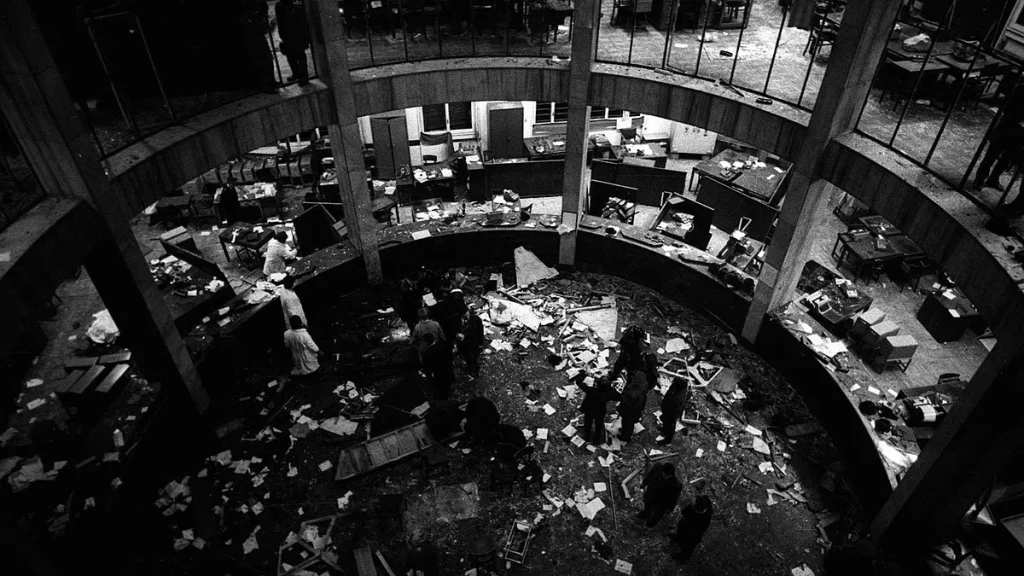
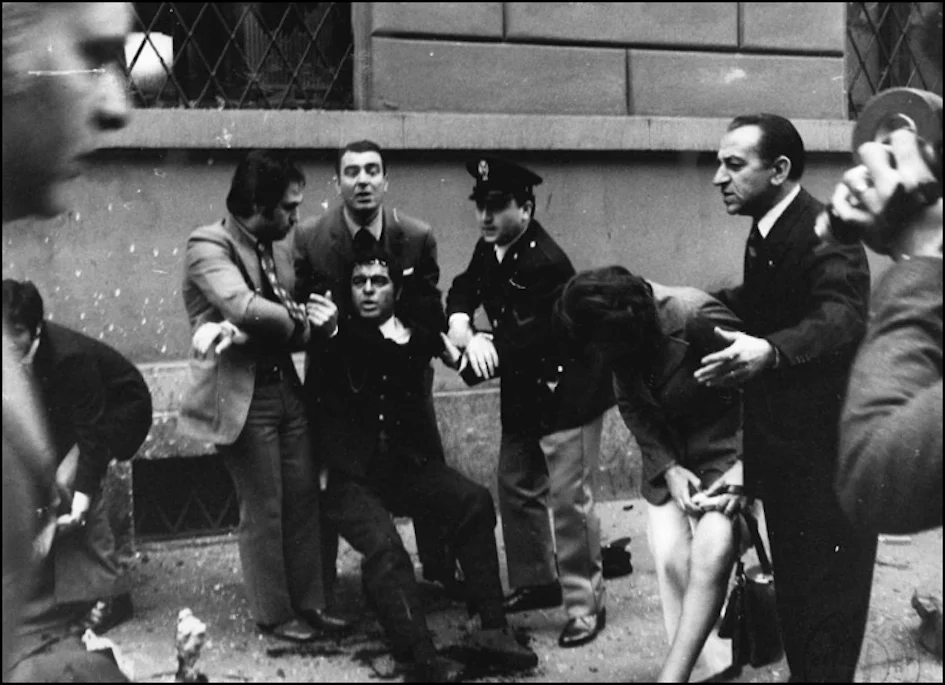
The first major event commonly linked to the strategy of tension was the Piazza Fontana bombing on 12 December 1969. At 16:37, a powerful explosive device detonated inside the main hall of the Banca Nazionale dell’Agricoltura in Piazza Fontana, Milan, killing 17 people and injuring 88. The explosion occurred during a busy weekday afternoon, when farmers from across Lombardy had gathered for business transactions, ensuring maximum casualties. Almost simultaneously, a second bomb was discovered and defused at another bank nearby, while three other devices exploded in Rome—two near the Altare della Patria and one inside the underpass at the Banca Nazionale del Lavoro—causing several injuries but no fatalities.
Initial investigations quickly targeted anarchist circles, leading to a large-scale roundup of suspects. Among those detained was Giuseppe Pinelli, a well-known anarchist and railway worker, who died under mysterious circumstances after falling from the fourth floor of the Milan police headquarters on the night of 15 December while being interrogated by police led by Luigi Calabresi. Though his death was officially ruled a suicide at the time, later findings cast serious doubt on this conclusion. Pinelli’s death became a national scandal and was later dramatized in Dario Fo’s Accidental Death of an Anarchist.
- 25 April 1969 – A bomb exploded at the FIAT pavilion of the Milan Fair, causing several serious injuries but no fatalities. Another bomb was found at the Currency Exchange Office of the Central Station.
- 9 August 1969 – Eight bombs were detonated on different trains, injuring twelve people.
- 12 December 1969 – A bomb exploded inside the headquarters of the Banca Nazionale dell’Agricoltura in Piazza Fontana, Milan, killing 17 and injuring 88. On the same day, an unexploded bomb was found at the Milan branch of the Banca Commerciale Italiana in Piazza della Scala. Three other bombs exploded in Rome: one in the underground passage connecting the Via Veneto entrance of the Banca Nazionale del Lavoro with Via di San Basilio (13 injured), and two near the Altare della Patria (4 injured).
- 22 July 1970 – A train derailed near Gioia Tauro due to sabotage with explosives. Six people were killed and around sixty were injured.
- 31 May 1972 – A Fiat 500 filled with explosives exploded near Peteano, in the province of Gorizia, killing three Carabinieri and injuring two others.
- 17 May 1973 – Gianfranco Bertoli, a self-proclaimed anarchist later revealed to be a provocateur, threw a hand grenade at the crowd during a ceremony outside the Milan police headquarters. Four people were killed and around forty injured.
- 30 April 1974 to 26 May 1975 – A series of explosions occurred in Savona, resulting in one death and twenty injuries.
- 28 May 1974 – A bomb hidden in a rubbish bin exploded during a trade union rally in Piazza della Loggia, Brescia, killing eight and injuring about one hundred.
- 4 August 1974 – A bomb exploded in a carriage of the Italicus train as it exited the main Apennine tunnel near San Benedetto Val di Sambro, Bologna province, killing 12 and injuring 105.
- 2 August 1980 – A bomb exploded in the waiting room of the Bologna railway station, killing 85 people and injuring around 200.
- 23 December 1984 – A bomb exploded in a carriage of the Rapido 904 train near the Apennine tunnel at San Benedetto Val di Sambro, killing 17 and injuring over 260.
Attention soon shifted from anarchists to neofascist elements. Subsequent inquiries revealed that members of Ordine Nuovo, particularly those from the Veneto region, were implicated in the planning and execution of the attack. Among the accused were Franco Freda, Giovanni Ventura, and Guido Giannettini, a military intelligence asset. The investigations were marred by continuous obstruction, destruction of evidence, and interference by intelligence officials. Key figures within the SID and elements connected to Gladio were suspected of sabotaging the judicial process to protect operatives and maintain plausible deniability. The Milan prosecutor Gerardo D’Ambrosio, involved in later investigations, testified to systematic tampering with evidence, including the mysterious disappearance of files, altered testimony, and pressure on witnesses.
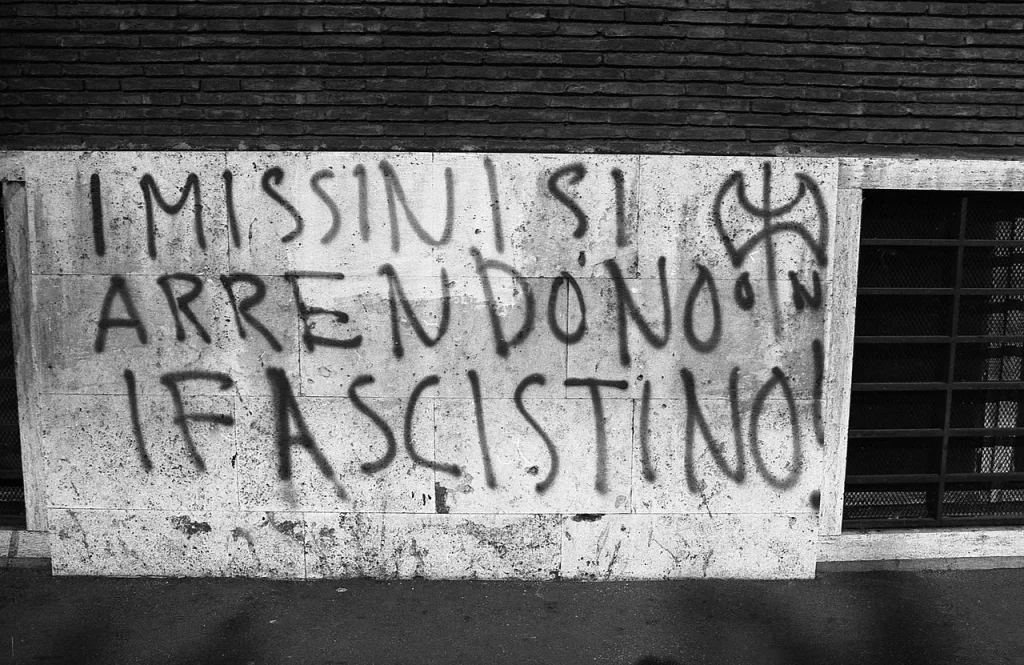

Although Freda and Ventura were initially acquitted and later declared unprosecutable due to double jeopardy, the 2005 ruling of the Court of Cassation concluded that the bombing had indeed been carried out by a group of neofascists affiliated with Ordine Nuovo based in Padua. Despite the absence of formal convictions for the principal perpetrators, the Piazza Fontana bombing is now regarded as the foundational act of the strategy of tension—a symbolic and operational blueprint for the years of coordinated terror that followed.
On 22 July 1970, a train derailed in Gioia Tauro, killing six. Though officially attributed to sabotage, the event remained unsolved. The same year, Junio Valerio Borghese, a former fascist commander, planned a coup d’état with the support of military officers and neofascist activists. Known as the Golpe Borghese, it was abruptly cancelled on the night of 7 December 1970, possibly due to last-minute institutional withdrawals or risk assessments.
Other attacks followed. On 31 May 1972, a car bomb killed three Carabinieri in Peteano, an attack later confessed by Vincenzo Vinciguerra, who implicated Italian intelligence and NATO structures in a broader campaign of manipulation. The Brescia bombing on 28 May 1974 targeted a leftist rally, killing eight. That same year, the Italicus train bombing (4 August) killed twelve. The apex of this campaign occurred on 2 August 1980, with the Bologna railway station bombing, which killed 85 and injured over 200.
In total, between 1969 and 1975, magistrate Fiorenza Giorgi recorded 4,584 attacks, of which 83% were attributed to the far-right. She also highlighted systemic cover-ups and links between perpetrators and the intelligence services.
Key Organizations: Ordine Nuovo, NAR, and P2
The network of actors implicated in the strategy of tension was complex and multi-layered. At its operational core were several far-right organizations, most notably Ordine Nuovo, which originated as a split from the Italian Social Movement (MSI) in 1956. This group developed strong paramilitary characteristics and established cells across northern and central Italy. Key figures included Franco Freda, a publisher with close ideological ties to European neo-Nazism, Giovanni Ventura, and Carlo Maria Maggi, who led the Venetian faction. Their activities ranged from propaganda to the logistical preparation of explosives, and several members were later identified as responsible for major attacks, including the Piazza Fontana bombing.
Another significant group was Avanguardia Nazionale, led by Stefano Delle Chiaie, who maintained transnational connections with Chile’s DINA, Francoist Spain, and the Aginter Press network. Delle Chiaie was often described as a “globetrotter of subversion” due to his travels through Latin America during the dictatorships, allegedly advising regimes on counterinsurgency and psychological warfare.
The Nuclei Armati Rivoluzionari (NAR), a younger and more violent splinter of the neofascist milieu, emerged in the late 1970s. Founded by militants such as Valerio Fioravanti, Francesca Mambro, and Luigi Ciavardini, the NAR adopted a decentralized structure and was responsible for multiple assassinations and the 1980 Bologna massacre. Though the group officially rejected the earlier strategy of infiltration and alliances, its actions coincided with the final and bloodiest phase of the strategy of tension.
Less visible but influential were groups like Rosa dei Venti, La Fenice, and the Movimento di Azione Rivoluzionaria, which acted as bridges between military environments and the radical right. Some of these organizations shared members with the armed forces or intelligence, reflecting a blurred line between institutional actors and clandestine operations.
The convergence of these groups was coordinated at key moments through Propaganda Due (P2), a secret masonic lodge directed by Licio Gelli. P2 maintained an internal list of members embedded across institutions—judiciary, army, police, and media. Investigations uncovered P2 documents describing plans for a restructuring of the Italian state along presidential lines, reflecting the ideological goals behind the strategy of tension. In the case of the Bologna bombing, Gelli and SISMI officials Pietro Musumeci and Giuseppe Belmonte were found guilty of obstruction of justice. P2 also had ties with international anti-communist networks and may have acted as a mediator between Italian operatives and foreign sponsors.

International Connections: CIA, NATO, Gladio, and Aginter Press
Documents declassified by WikiLeaks—specifically the Kissinger Cables—revealed unease within the U.S. diplomatic corps regarding Italian judicial investigations targeting neofascist groups, suggesting that elements within the U.S. government were concerned these investigations might compromise broader anti-communist objectives in Europe. The cables indicated a reluctance to fully support Italian magistrates probing the links between far-right operatives and state institutions, out of fear that such inquiries could disrupt NATO cohesion or reveal sensitive operations.
Further documentation and research suggested that the CIA, along with the Portuguese PIDE (the political police of the Salazar regime), and Francoist Spain provided various forms of support to Aginter Press, a covert pseudo-press agency that served as a front for paramilitary training and psychological warfare. Aginter Press had strong ties with Italian neofascist organizations, and operated transnationally in coordination with figures like Stefano Delle Chiaie.
While the full extent of U.S. and allied involvement remains obscured by classified materials and diplomatic deniability, testimonies from insiders—particularly Gianadelio Maletti, former head of SID’s counterintelligence division; Vincenzo Vinciguerra, convicted for the Peteano bombing; and Carlo Digilio, a confessed informant and arms technician—affirmed that logistical support, training infrastructure, and intelligence sharing did occur. According to these accounts, the strategic objective was to prevent any communist participation in government, even at the cost of sponsoring or protecting domestic terrorism, provided it targeted political stability from the left. The indirect role of Western intelligence agencies, particularly through proxies, underscores the international dimension of Italy’s internal destabilization.
The Ustica massacre (1980), involving the destruction of an Itavia DC-9, was also linked to this period. Though the incident remains formally unresolved, competing theories suggest either NATO involvement or Libyan retaliation. U.S. cables indicated concern over Italian judicial exposure of NATO operations.
Judicial Proceedings: Convictions, Acquittals, and Cover-ups
Judicial proceedings related to the strategy of tension produced relatively few definitive convictions, often due to procedural errors, lack of evidence, or deliberate obstruction. In the case of the Piazza Fontana bombing, Franco Freda and Giovanni Ventura, members of Ordine Nuovo, were initially prosecuted but later acquitted. Despite the acquittal, a 2005 ruling by the Italian Court of Cassation concluded that the attack had been executed by the Padua-based neofascist cell led by Freda and Ventura, effectively recognizing their moral and operational responsibility without legal consequences due to the principle of ne bis in idem.
The Peteano bombing of 1972 resulted in the conviction of Vincenzo Vinciguerra, who confessed to the attack and provided detailed testimony on the involvement of secret services and Gladio-affiliated networks. Vinciguerra’s account became a critical piece of the historical and judicial record, as he openly accused sectors of the Italian state of collaborating with neofascist militants to foster chaos and repression.
Regarding the Bologna bombing of 1980, three members of the NAR—Francesca Mambro, Giuseppe Valerio Fioravanti, and Luigi Ciavardini—were convicted as the principal perpetrators. All denied involvement, though their sentences were upheld through multiple appeals. Their convictions were accompanied by rulings that identified a broader support structure, though many alleged masterminds and facilitators remained beyond the reach of prosecution. The trials also led to the conviction of Licio Gelli, Pietro Musumeci, and Francesco Pazienza for obstruction of justice and manipulation of evidence.
Public Discourse: Pasolini, La strage di Stato, and Cultural Legacy
The phrase “strategy of tension” gained currency following early media investigations and a surge in counter-narratives that emerged in response to official explanations of the bombings. One of the most influential texts of the period was the 1970 volume La strage di Stato, which accused sectors of the Italian state of orchestrating the Piazza Fontana bombing. Compiled by a collective of journalists and intellectuals, it sold tens of thousands of copies and contributed to the diffusion of the expression “State massacre” (strage di Stato) as a term of political indictment.
Among the most forceful public accusations came from Pier Paolo Pasolini, who in his 1974 article Io so (“I know”), published in the Corriere della Sera, claimed to know the identities of those responsible for the stragismo, or bombing campaigns, though he admitted he had no proof. He described the violence as the product of intersecting interests between old fascists, sectors of the intelligence services, and elements within the political class. His denunciation extended to the manipulation of public opinion and to the “system of power” which, in his view, governed Italy through covert repression.
Pasolini’s subsequent murder in 1975—officially attributed to a street crime—was widely seen as suspicious, with numerous commentators and investigators later proposing that his death was politically motivated. His posthumous writings, including the essay Processo alla DC, continued to challenge the role of the Christian Democrats and other state actors in what he viewed as the orchestration or tolerance of a permanent coup strategy. Pasolini’s contributions remain central to the cultural and intellectual legacy of public resistance to the strategy of tension.
Over time, leftist slogans such as “State terrorism” and “State massacre” crystallized opposition narratives. Activists, journalists, and later historians developed interpretations linking Italy’s internal violence to broader Cold War counterinsurgency structures, including Operation Condor in Latin America.
Sources
- Wikipedia
- La rete internazionale del terrorismo italiano, Gnosis, 2005
- Il Fatto Quotidiano
- La Repubblica
- Corriere della Sera
Topics: Italian political violence, state collusion Italy, neofascist terrorism Italy, Cold War Italy, Gladio Italy, Piazza Fontana bombing, Bologna train bombing, Italian intelligence SID, Licio Gelli Propaganda Due, Stefano Delle Chiaie, judicial inquiries terrorism Italy, Vinciguerra testimony, Aginter Press Italy, false flag Italy, postwar Italian repression

Weird Italy, Guide to Unusual & Amazing Places to see in Italy. Italy’s news in English: Art, History & Facts