
What Ovid’s Seduction Manual Tells Us About Catcalling in 2025
How many times have girls or women found themselves being watched while crossing a street? In recent decades, through social media, various videos have been uploaded and circulated that expose a global phenomenon: girls walking down the street documenting the same male behavior, persistent, continuous stares, sometimes even harassing and invasive. Some viral videos have highlighted the continuity and repetitiveness of these looks, emphasizing the sense of discomfort and how the phenomenon has been normalized without women’s consent.
Featured image: American Girl in Italy, Ruth Orkin, 1951

A well-known video that offers an account of a social experiment aimed at sharing the often difficult situation women face every day shows a girl simply walking, doing nothing to attract attention, yet being forced to navigate around supposed admirers or “hunters” who treat her as if they knew her and had always been familiar with her. In 2014, the nonprofit Hollaback!, now Right to Be, which has long worked to report cases of street harassment, conducted this experiment in which a girl walking through the streets of New York is harassed 108 times and even followed silently for 5 minutes.
What seems like a contemporary reality has roots far older than one might imagine.
In the 1950s, the photographer Ruth Orkin, during a trip to Italy, captured a scene on the streets of Florence in 1951 that today appears strikingly familiar to many girls. The young American Ninalee Craig, known as “Jinx Allen,” was walking down a central street while a group of men watched her with insistent curiosity. The photograph was part of an original series titled “Don’t Be Afraid to Travel Alone.” The photographer explained that the image was not staged and that it was just one of many taken throughout the day, with the aim of showing the experience of a woman traveling alone. The shot, titled “American Girl in Italy,” became an icon of its time, but the attitude and behavior of the men depicted carry a symbolic meaning that points to enduring persistence, this photo could easily have been taken today, near a subway station or a shopping mall, with only the clothing and accessories changed.
A similar image, “Gli Italiani si voltano” (“The Italians Turn Around”), was also taken by the Italian photographer Mario De Biasi. In Milan in 1954, a young Moira Orfei stands at the center of the scene, crossing the street surrounded by male gazes. The sense of exposure and attention is the same across time, as in today’s videos, the dynamic remains unchanged: a woman walking through a public space attracts persistent looks from all around her. If someone thinks this phenomenon is documented only thanks to photography or viral videos, they are gravely mistaken. It is not a phenomenon that originated in the 20th century: the history of the insistent gaze has archaic roots and can be found even in ancient Rome.

The Art of Conquest in Ancient Rome: Strategies from the Circus to the Baths
Already in Ovid’s time, in the Ars Amatoria, the author offered advice on how to seduce in public places, including the Circus Maximus during the chariot races. A crowded, noisy space full of spectators, much like today’s busy streets, where a woman became the target of the male gaze without even having to move. Who would ever have imagined the Circus Maximus as a place of seduction? And yet, the dynamic is very clear: in the place of games, games of visibility, attention, and therefore of gazes, were created.

The Circus Maximus, known above all as the great arena for games and chariot races, was not only a sports or entertainment venue: it was also a place of social contact and public interaction. Spectators came from different social classes, and the crowd created an environment in which subtle courtship and amorous play could unfold almost “in public.” As some Latin texts suggest, the presence of noise, crowds, and movement allowed men and women to observe one another, cross paths, and exchange signals, sometimes with seductive intentions.
The Circus Maximus was not only the heart of Rome’s sporting life, but also a social stage. Writers such as Ovid made it a symbol of the art of conquest, where the audience and crowd created an ideal setting. Seduction in ancient Rome was a refined art, governed by attention to detail, social observation, and the ability to turn everyday situations into opportunities for encounter.

Unexpectedly, in the Circus Maximus, where the crowd moved restlessly and the shouts of spectators dominated, a form of silent courtship emerged, relying on the furtive yet persistent gaze. Those who knew how to observe also knew how to communicate without words: a hint of attention, a brief exchange of glances, a faint, barely perceptible smile.
Ovid’s work, divided into three books, offers men strategies for winning over women and gives women advice on how to attract their lover, even in this space, understood as a social setting and a place of seduction. It is also interesting to note that the ancient Roman circus, located in the valley between the Palatine and Aventine hills, is historically remembered as the site of games since the very beginnings of the city’s history. According to the Consularia legend recounted by Livy, it was in the Valley of Murcia that the mythical episode of the Rape of the Sabine Women took place, during the games organized by Romulus in honor of the god Consus.

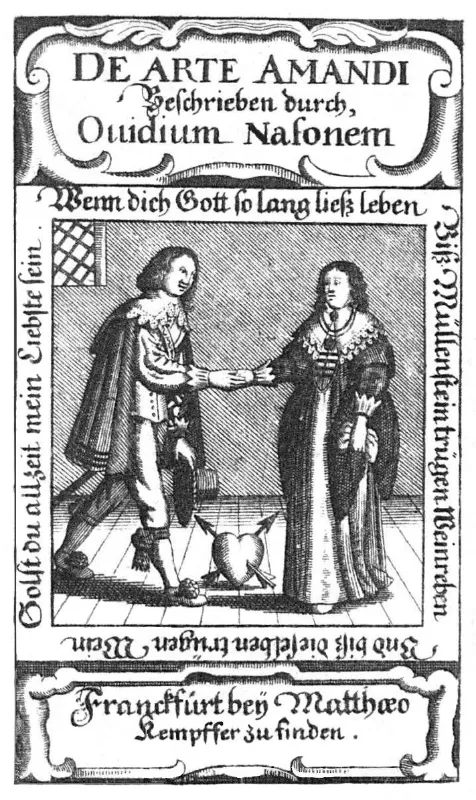
In the Ars Amatoria, drawing on his experience as a poet and lover, Ovid assumes the role of praeceptor amoris, a teacher of eroticism, who teaches lessons on practicing the art of seduction. Ovid’s innovation lies in having reinterpreted the role of the praeceptor. He observes the love relationship between two partners from the outside and delights in giving detailed advice, urging readers to follow it rigorously, almost as one would follow a recipe or the technique needed to win a game of chess. The woman’s role is merely that of prey to be hunted among many others, much like the way many women today are treated in the street, attracting unsolicited stares and catcalls. Ovid believes that in order to “capture” the prey, one must employ strategies and tactics.
In any case, this suggestion was in open contrast with the tradition of erotic elegy of his time, since earlier poets who wrote on the same theme preferred enclosed spaces where lovers could remain alone, rather than open and crowded settings. Ovid, instead, wrote that horse races, an activity beloved by the Romans, were particularly favorable. Once the prey had been spotted, the hunter needed to appear confident and promptly engage the girl in conversation on any possible topic. If the hunter did not know how to answer one of her questions, he would resort to invention, never allowing the conversation to falter.
The poet assured that the strategies of seduction he proposed were universal and valid for any young woman, perhaps for this very reason the gaze, as the first signal, has remained a persistent phenomenon through time up to today. However, at the end of his work, the author emphasizes that despite everything he himself had set out, love could not be an exact science, and therefore each woman would require a different method to be won over, since different contexts and different habits might come into play. In short, Ovid acknowledges and understands women’s freedoms and their diverse identities.
Ovid, who advised and encouraged young Roman men to frequent public places such as the Circus Maximus, theatres, and Thermae as opportunities to meet potential partners, explained that the Circus, with its crowds and the spectacular nature of its events, became an ideal setting for quick glances, subtle gestures, and first approaches, all while maintaining the appearance of public innocence. The author also suggested the use of clothing, perfumes, proper posture, and strategic behaviors to attract attention. For example, in crowded settings he advised both women and men to position themselves in visible spots and to use the movement of the crowd as a backdrop for their gazes. He emphasized how, amid the noise of the chariots, one should observe who returned the glance and allow the randomness of the crowd to generate encounters: the games and the spectacle were pretexts for conquest.
Men could observe women during public games and practice discreet eye contact, facilitated by the confusion of the large crowds and the enthusiasm of cheering supporters. It was also an ideal place to notice a woman without having to approach her openly. The density of the crowd and the movement of the chariots allowed for furtive looks and the exchange of signals without exposing oneself too much. This type of public yet discreet approach valued cleverness and timing.
Ovid insists on the importance of eye contact as a tool of attraction: catching someone’s gaze is the first step in seduction. Even in the middle of the crowd, he recommends being able to maintain brief conversations as an additional instrument of seduction, commenting on the spectacle or sharing the passion of the event. These small dialogues create pretexts for getting closer without appearing intrusive; the author understood the importance of discretion, a part of the message that seems not to have survived into our own time.
Ovid also compares seduction to a game: the Circus Maximus, with its races and wagers, is an ideal setting where attraction manifests itself as a social game in the midst of collective entertainment.
Juvenal, a great satirical author who loved to describe the environment in which he lived, wrote in an era when those in power secured popular support through regular distributions of grain (panem), sometimes supplemented with monetary handouts granted to about 200,000 Roman citizens, and through the organization of grand public spectacles (circenses) such as gladiator fights, combats with wild animals, and especially the chariot races at the Circus Maximus. He coined the expression “panem et circenses,” literally “bread and games,” a Latin phrase used in ancient Rome to summarize this practice, and in contemporary times often used to refer to political strategies.
(Latin)
«[…] [populus] duas tantum res anxius optat:
panem et circenses»
(English translation)
“[…] the people anxiously desire only two things:
bread and circuses.”
Other Latin authors, such as Catullus, Martial, and Propertius, provide insights into romantic behavior in everyday life in ancient Rome:
Catullus, with his love lyrics collected in the Catulli Veronensis Liber, representing the first example of Latin literature capable of expressing the intensity of romantic passions, wrote about clandestine loves and burning passions, often set within urban life, banquets, or public walks.
Martial, commonly considered the most important Latin epigrammatist, described with irony and at times licentiousness the amorous encounters and small daily “adventures” in the city.
Propertius, like Ovid, emphasized the art of seduction as careful observation, cleverness, and social games, but never as violence or imposition.
Some concrete aspects of Roman love life that emerge from these texts and historical studies show the importance of courtship, which could take place in public spaces (theatres, the Circus Maximus, Thermae) but often culminated in private encounters. There were rules regarding gender roles: men were generally the initiators of seduction, but only certain women, especially the more educated or socially privileged, knew how and were able to engage in the art of seduction and charm. Social rituals were fundamental; spectacles, banquets, and races became pretexts for socialization, where mutual observation and dialogue could turn into flirtation or genuine relationships.
Techniques of attraction included the use of elegant clothing, perfumes, hairstyles, but above all, attention to glances and gestures. According to Ovid, one also needed to simulate acquiescence to every request and whim of the “prey,” so that she would believe she was dealing with a faithful and generous lover. Ovid advises lovers:
(Latin)
«Fallite fallentes»
(English translation)
“Deceive those who deceive.”
Love, therefore, is also a ruthless war in which the end justifies the means, whether honorable or deceitful. It is thus important that the lover never appear weak in the eyes of the beloved and, above all, that he does not become a slave to love. The message, strikingly contemporary, seems to have reached the ears of men who may not even know who Ovid was.
These rules of seduction, recounted by Ovid and as ancient as Rome itself, appear to have come to the attention of many contemporary men without ever being passed directly to their eyes or ears, since few today have read Ovid or listened to his advice. Even now, in 2025, many people put them into practice without knowing anything of the Ars Amatoria: the gaze, the smallest gesture, the subtle persistence, all become tools of capture.
The Fluidity of Desire: Gender and Attraction in Roman Society
That flash no one expects, and no one forgets, the play of glances that creates love at first sight, in ancient Rome was not rigidly tied to the sex of the person. Sources show that attraction could be directed toward men or women, and Latin literature, including Ovid, attests to amorous behaviors far more fluid than one might imagine today. In ancient Rome, love at first sight and attraction were without distinction of gender. In Roman culture, there was no concept of sexual identity comparable to the modern one (LGBTQ+, heterosexual, etc.). What mattered socially was not who one loved, but the social role one held in the relationship (for example, free or slave, citizen or non-citizen). In daily life, attraction was experienced with considerable freedom, both in poetry and in urban life.
Indeed, in the Ars Amatoria, Ovid advises young men to go to the Thermae to meet potential lovers. It should be noted that Roman Thermae were often divided by gender: men and women accessed the same facilities at separate times (for example, men in the morning and women in the afternoon). Although some large baths had dedicated sections, these were social and hygienic spaces frequented by everyone, with temporal or spatial separation depending on the bath complex. Even though Ovid mostly speaks of men seeking women, the bath setting was naturally open to all kinds of attraction: men looking at men, women looking at women, men looking at people of any gender. The baths were highly social public spaces where people circulated naked or semi-naked, just as social classes mixed in the Circus Maximus, allowing everyone to freely observe each other’s bodies. Ovid describes the baths with irony and realism as one of the privileged places for “undifferentiated” encounters, enabling immediate attraction and fleeting meetings. Satirical sources such as Juvenal and Martial confirm that attraction and desire between men existed, and that the baths were one of the spaces where these dynamics unfolded.
“Non-heteronormative” relationships and attractions were known, practiced, often accepted (within certain social rules), and above all, not seen as fixed identities. There was no “LGBTQ+ category,” but the reality existed. For this reason, historians and scholars assert that ancient Rome was socially more fluid, though still governed by norms tied to social status and power.
The Literary Fathers and Their Sacred Encounters
Many other Italian authors have written about the intense, codified social dynamics related to gazes and seduction, but instead of taking place in the time of Rome and the Circus Maximus, in the Medieval period these rituals occurred in local churches. Would you ever have imagined the church as a place to begin a courtship, a love story, or even erotic seduction?
The Church, which accused and pointed its finger at lust, knew very well that during Mass an opportunity arose for wealthy families to “showcase” their marriageable daughters and allow young men to choose them. It was a tacit social ritual in which parents supervised, yet silently allowed boys and girls to “spot each other,” because that was the necessary prelude to any future marriage negotiation, a true social paradox in pure pre-Italian style.
In Italian history and in the literature of the time, these episodes are widely documented, and as Roberto Benigni and Massimo Troisi also portray in a grotesque way in the film Nothing Left to Do but Cry, scripted as well by Giuseppe Bertolucci, the church was, in fact, the quintessential marriage and seduction marketplace. There were no bars, nightclubs, or mixed public squares as we understand them today. Inns, meeting places halfway between a bar, a restaurant, and a guesthouse/boarding house/hotel, were for travelers, wanderers, and troublemakers, not for “respectable young ladies.” Thus, the world of ancient Rome appears more emancipated with respect to women, who could enjoy public entertainment spaces regardless of class or skin color, as happened at the Circus Maximus.
In the Italian 1984 film in which the two protagonists travel back in time, not in the manner of Back to the Future or Peggy Sue Got Married, but much closer to being an ante litteram version of the 2010 Futurama episode “The Duh-Vinci Code” or the 2014 film Mr. Peabody & Sherman, where time travel allows them to meet the brilliant, multifaceted Tuscan, these two also draw closer to the daily life of the era and come to understand the dynamics of seduction and exchanged glances between men and women within the walls of a church.
But why precisely the church? First of all, one must consider the everyday life of a young woman from a respectable family between the Middle Ages and the pre-industrial era. Testimonies from the period and scholarly research confirm that a girl spent most of her life in seclusion: she stayed at home, in the inner courtyard, or she went out strictly accompanied, much like what is shown in the series The Handmaid’s Tale, based on the 1985 novel by Margaret Atwood. Sunday Mass and local festivals, therefore, were literally the only socially accepted occasions on which a girl could leave the house dressed in her finest, remain for a long time in a public place, an hour or more, and be seen by men who were not her relatives, acquaintances of her family, or servants within her domestic sphere.
The historical detail that makes everything clearer, and explains why the church took the place of the Circus Maximus, is the separation of the sexes. Even though, until very recently, especially in certain areas of Southern Italy up to the mid-1900s, men sat on one side, often on the right or near the entrance, and women on the other, on the left or closer to the altar, sometimes even separated by curtains or by different aisles, in other places the separation was even more pronounced. Paradoxically, these gender divisions continued in some schools run by nuns or priests in Northern Italy and were only discontinued around 1990.
This physical separation in daily and civic life made the “exchange of glances” not only romantic but necessary. Speaking to one another was not possible, since it was considered sinful and/or socially inappropriate if the families did not know each other or did not already have “pre-marital” agreements. The only possible form of contact was visual: one had to seek a connection through eye contact from one aisle to the other, or “intercept” the desired/loved person at the entrance or exit. The moment of dipping one’s hands into the holy water was strategic, since touching was forbidden, and for a very select few this was the only opportunity for shared, consensual contact with the object of their desire.
The fathers of Italian literature cross gazes with their beloveds in religious settings, where “love at first sight” occurs. The studies and accounts on the subject are neither fantasy nor simple suppositions; they can be found in chronicles and written literature from those very centuries and are depicted through the narratives and testimonies of the protagonists themselves, some almost like personal diaries. Anyone who has studied, either out of personal interest or by family expectation, knows that the greatest literary infatuations in Italian history took place during Mass, inside a church.
The Neuroscience of Love at First Sight: When the Brain and Body React
Love at first sight, the spark of instant attraction, is a moment that suspends time, in which emotions, thought, and body align and misalign. Some say they feel a grip in their stomach or butterflies in their gut, their heart speeding up, and the words they are speaking in a conversation begin spilling out of their mouth in a disjointed way, forming sentences without meaning because the eyes are in a place with the mind, and not where the body and mouth are. When “the eye falls in love,” it is actually the brain reacting within a few infinitesimally small fragments of moments, incalculable, since the neurons connecting the brain activate the limbic system. The gaze upon a person who captures one’s attention activates certain brain areas such as the amygdala (intense emotions), the hypothalamus (physical responses), and the nucleus accumbens (pleasure and reward). Dopamine and noradrenaline are rapidly released: this is why the heart speeds up and people feel “shaken.”
Love at first sight activates the autonomic sympathetic nervous system, the one responsible for rapid bodily reactions, since it causes an increased heart rate, slight sweating in some people, and/or faster breathing. It is like an “emotional shock.”
Because the brain and the gut are connected through the vagus nerve, a major highway of signals that share many of the same receptors (for serotonin, adrenaline, dopamine), and because the gut is extremely rich in neurons (which is why scientists also call it the “second brain”), when the brain is activated, the gut responds as well. The noradrenaline released by this “emotional jolt” temporarily reduces digestive activity: the intestinal muscles contract in an irregular and rapid way, this is why people feel butterflies in the stomach.
Love at first sight is a real reaction, not just a poetic idea. When the gaze meets that of someone desired and finds him/her appealing, the brain interprets it as something extremely rewarding, triggering a neurochemical surge (dopamine, adrenaline) that produces a physical response.
People who learn to understand themselves describe it in their own uniquely personal way. They express it by telling their story, and the major fathers of Italian literature have portrayed their own moments of love at first sight with profound intensity.
Dante, Petrarch, and Boccaccio: Love at First Sight in Sacred Spaces
For Dante, although the first encounter takes place in the street, many of the glances and the “saluti” (which, in the Stilnovo tradition, are described as salvific acts) occur in religious public settings or during processions: that moment had the character of an epiphany. When he meets Beatrice for the first time, the vision of love at first sight is almost sacred for him: the beloved’s gaze is not only beautiful, but revelatory. In the skipped heartbeat, Dante felt a call that transcended the earthly realm, a promise of elevation. Love at first sight, then, is not a mere emotion, but the beginning of a journey.
(Original)
“In quello punto dico veracemente che lo spirito della vita, il quale dimora ne la secretissima camera de lo cuore, cominciò a tremare sì fortemente, che apparia ne li menimi polsi orribilmente”
(English translation)
“At that moment I say in truth that the spirit of life, which dwells in the most secret chamber of the heart, began to tremble so violently that its dreadful trembling appeared even in the slightest pulses.”
(Vita Nova, cap. II)
Petrarch instead transforms into a movement of the soul the very instant when his eyes meet those of the beloved: this is what happened between him and Laura. For him, it is an eternal fragment etched into memory. He explicitly recounts having met her for the first time, and having fallen in love the moment their eyes crossed, on April 6, 1327, in the Church of Santa Chiara in Avignon, during the Good Friday Mass. He felt sweetness and torment born in the same instant: beauty that wounds and saves. Love at first sight becomes a meditation and In that gaze he saw peace and storm.
Boccaccio describes the unpredictable instant, love at first sight as the fragrance of real, concrete life. It is in the crowd or in the street, among ordinary people, that a sudden face captures the gaze. Not an angelic apparition, but a vivid, joyful spark, full of desire and wonder. Boccaccio writes of Maria d’Aquino, called Fiammetta, whom he saw in the Church of San Lorenzo in Naples on Holy Saturday, with warm human immediacy: embarrassment, a quickening heart, the irresistible urge to speak, to draw near, to smile. Love at first sight is a game, a pleasant whirlwind that brightens the day.
Whether it is the great Roman chariot races, a street in Florence in the 1950s, or a modern city street or metropolitan area today, the insistent male gaze remains a historical constant. The historical dates change, the contexts change, the clothing changes, but the experiences of the women involved remain similar: crossing a public space means being watched, sometimes intrusively, and often without an escape.
And perhaps this awareness is the first step toward understanding such an ancient phenomenon: recognizing it and telling its story. History shows us that none of this is new, and therefore efforts must be made to help, improve, and change the experiences for new generations. From Ovid to the Circus Maximus, from Ruth Orkin to today’s streets, the male gaze has always carried weight … and the women involved have always had to walk through it, sometimes reluctantly. Tradition does not always mean something positive to accept; sometimes it is simply mistakes repeated over time, and in this case, a surprising continuity emerges from antiquity in certain male behaviors.
But, as in the past, even today this strategy does not always work. Looking, or insisting too much, can annoy or intimidate; it must be remembered that seduction, although universal, always requires sensitivity. The social context changes, but the dynamic remains, and only today can it be visually documented as never before. The phenomenon of the persistent male gaze has spanned millennia. On one hand, men continue to employ the same techniques; on the other hand, women, as demonstrated by debates starting in the 1940s in the United States, including those involving Rosa Parks, don’ t always welcome it. More often than not, they consider stares and catcalls as the gateway to worse harassment. Women have emancipated themselves and demand independence, privacy, the right to invisibility, and to be left in peace within their personal freedom.
The silent gaze, an ancient vehicle of desire, remains powerful, but it must be measured. It remains a delicate art that has endured through the centuries. Yet, between eyes that seek each other and eyes that sometimes avoid one another, to truly be a game of attraction and seduction, it must be consensual.
Sources:

 Ciao! My name is Dominique. I’m Italian and I’m proud to be a mix. My father was an Italian chemical engineer and high school teacher, with Greek and Polish heritage. My mother is Haitian, she was high school language teacher, with Dominican, Spanish, French, Portuguese, African and Native American heritage. Being a mix makes me appreciate to want to understand different cultures and lifestyles. I grew up in Italy, lived few years in Haiti, travel around main European capitals, lived seven years in China, six in Spain and UK. Traveling makes me feel that we can learn something from every situation in every part of the world.