
The Condottieri: Mercenary Captains Who Terrorized Renaissance Italy
The condottieri, captains of mercenary companies, were a defining feature of Italian warfare from the 14th to the 16th centuries. The political landscape of the Italian peninsula, a fractured mosaic of competing city-states, papal territories, and regional lordships, created a continuous demand for professional soldiers. These captains, bound by a contract or condotta, led private armies known as compagnie di ventura (companies of fortune) and became central actors in the conflicts of the age. Their ranks included men from all social strata, from dispossessed nobles seeking to reclaim their status to commoners who saw military service as a path to wealth and power.
Featured image: The slaughter at Cesena, perpetrated by Robert of Geneva (later to become Antipope Clement VII) while serving Pope Gregory XI in the War of the Eight Saints
While warfare is inherently violent, the individuals documented in this report distinguished themselves through a degree of brutality that often surpassed the accepted norms of their time. Cruelty functioned as a deliberate instrument of conflict, rather than an accidental consequence. It was employed as a systematic business model for extortion, a method for the complete demoralization of an enemy, a tool for the suppression of political dissent, and an expression of personal vengeance. Their actions demonstrate a spectrum of violence, from the indiscriminate, profit-driven terror of foreign companies with no stake in the land they ravaged, to the more targeted, political cruelty of Italian lords seeking to build and maintain a state.
The biographical details referenced here are drawn from the website condottieridiventura.it.
Castruccio Castracani (1281-1328)
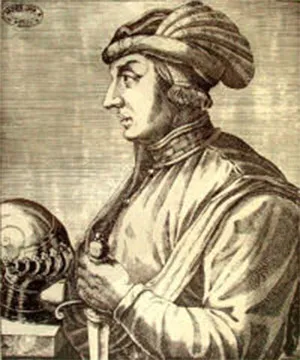
Born in Lucca to the prominent Ghibelline Antelminelli family, Castruccio Castracani was forced into exile in 1300. After gaining military experience serving Philip the Fair of France, he returned to Italy and entered the service of the Visconti of Milan. In 1316, he was acclaimed Captain General of Lucca, eventually consolidating his power to become Duke of Lucca and lord of numerous other Tuscan cities. His long war against Florence was characterized by strategic cruelty designed for political intimidation. His campaigns involved the systematic devastation of enemy territory, and after his victory at Altopascio in 1325, he paraded Florentine prisoners through Lucca in a mock triumph. To symbolize his absolute authority, he constructed a fortress named “Cacciaguerra” (War-Chaser) on the site where the houses of his political opponents had been demolished. Despite a career of relentless warfare, Castracani died not in battle but from malaria in Lucca on September 3, 1328. His sudden demise at 47 led to the swift disintegration of the empire he had built.
Fulceri da Calboli (d. 1340)
A noble Guelph from Forlì, Fulceri da Calboli was a significant figure in the conflicts of Romagna and Tuscany. His reputation for cruelty was cemented during his time as podestà (chief magistrate) of Florence in 1303, a role contemporary chroniclers said he used as a “most ferocious and cruel man.” He launched a campaign against his political adversaries, the White Guelphs and Ghibellines, arresting, torturing, and publicly decapitating them under accusations of treason. His ferocity extended to the battlefield; after a victory over the Ordelaffi family, he had 10 prisoners brought back to Florence specifically for execution. The poet Dante Alighieri is believed to have referenced him as a “hunter of human flesh.” Despite the enemies he made through his political and military brutality, Fulceri da Calboli died of natural causes in 1340, safely inside his own castle.
Guarnieri di Urslingen / Werner von Urslingen (c. 1308-1354)
Werner von Urslingen, a German nobleman, was one of the most notorious foreign condottieri in Italy. He founded the “Great Company,” a highly disciplined mercenary army that perfected the art of systematic devastation for profit. Their business model was encapsulated in the motto Urslingen wore on his silver breastplate: “Duke Werner, Lord of the Great Company, enemy of God, of priests, and of mercy.” His campaigns were trails of destruction; he ravaged the territories of Siena, Perugia, Modena, and Mantua, burning towns and leaving behind a “trail of atrocities.” At San Secondo Parmense in 1347, his company sacked the town and massacred its women and children, with Urslingen reportedly boasting he had not left even the animals alive. After a career of unparalleled destruction and enrichment, Werner von Urslingen eventually returned to Germany, where he died of natural causes around 1354.
Giovanni di Maléstroit / Jean de Malestroit (d. c. 1385)
Jean de Malestroit was a nobleman from Brittany and a senior captain in the “Company of the Bretons,” a mercenary army hired by the Papacy in 1376. Under the command of Cardinal Robert of Geneva, the company engaged in widespread violence against civilians. Maléstroit was a key participant in the Cesena Massacre of February 1377. After citizens rebelled against the Breton garrison, the Cardinal ordered a punitive slaughter. Maléstroit’s troops were unleashed on the population, killing between 2,500 and 8,000 people, with chroniclers recording that pregnant women were disemboweled. He was also responsible for massacres in Montegiorgio and Bolsena. Jean de Malestroit ended his days obscurely, dying from a severe illness in Naples around 1385. A contemporary chronicler, hearing of his death, expressed the hope that “Satan carried away” his soul.
Ottobono Terzi (c. 1360-1409)

Ottobono Terzi, an Italian condottiero from a noble Parmesan family, was described as “ferocious, treacherous, and vengeful.” After serving under John Hawkwood, he seized power for himself during the turmoil in the Duchy of Milan, becoming the lord of Parma, Piacenza, and Reggio Emilia. He maintained his rule through terror, ordering mass executions such as the beheading of thirty-six captured supporters of the Pallavicini family. He was also capable of personal cruelty, once killing a prisoner with a sword thrust to the throat for giving him contemptuous answers. In 1409, his violent career came to a fittingly violent end. He was killed by his rivals, Muzio Attendolo Sforza and Michele Attendolo. His body was subjected to a ritualistic dismemberment: it was quartered and displayed on city gates, his entrails were fed to dogs, and his severed head was impaled on the battlements of his rival’s castle.
Facino Cane (1360-1412)
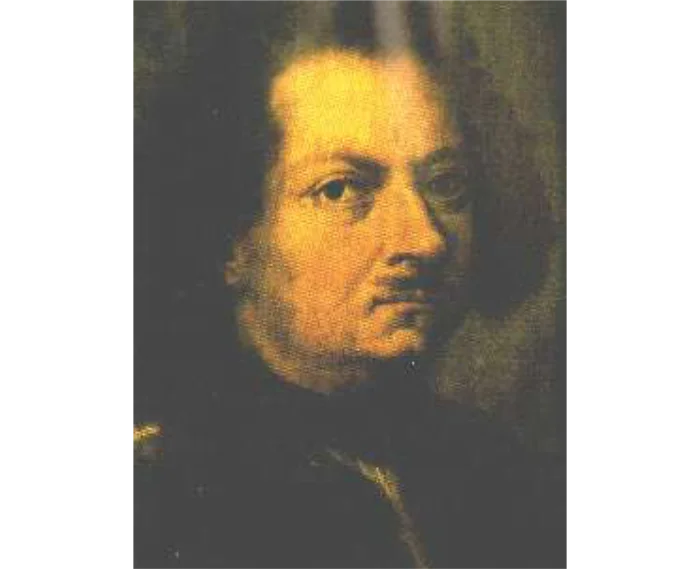
Born Bonifacio Cane, Facino Cane rose from a noble but modest family to become one of the most feared condottieri of his time. After the death of Duke Gian Galeazzo Visconti, Cane became the de facto ruler of the Duchy of Milan. His brutality was a core component of his strategy, “aimed at spreading terror around himself.” His campaigns were characterized by large-scale looting and destruction; in 1388, his sack of Aquileia was so ferocious that it caused a scandal. He showed no mercy to civilians who resisted, killing many who tried to defend their property, and drowned political opponents in the Po River. Despite a life of bloodshed, Facino Cane was not killed in battle but died from a severe attack of gout in May 1412. His timely death allowed the young Duke Filippo Maria Visconti to marry his widow, Beatrice di Tenda, thereby inheriting Cane’s army, cities, and immense fortune, which formed the foundation of the Duke’s power.
Filippo Arcelli (c. 1375-1421)

A condottiero from Piacenza, Filippo Arcelli was known as a proud, ambitious, and cruel man. He seized control of his home city in 1415, an act accompanied by widespread “looting, slaughter, and destruction.” His cruelty was defined by a ruthless determination to hold power, subordinating even family ties. His most infamous act occurred in 1418 while besieged in Piacenza by the Visconti general Carmagnola. When the enemy captured his brother Bartolomeo and his son Giovanni, Carmagnola threatened to execute them unless Arcelli surrendered. To demonstrate his unbreakable resolve, Arcelli refused and allowed his brother and son to be hanged in front of the city gates rather than relinquish power. In July 1421, Filippo Arcelli’s life of high-stakes conflict ended violently when he was killed in combat.
Everso dell’Anguillara (c. 1398-1464)
Everso dell’Anguillara was a powerful and predatory Roman nobleman who spent his long career brutally expanding his territory at the expense of his rivals, the Orsini family, and the Papacy. Contemporary accounts describe him as a tyrant for whom “killing a man was as easy as slaughtering a sheep.” He was accused of devising “ruthless and unheard-of” instruments of torture for his enemies, systematically raping the wives and daughters of his subjects, and operating as a common bandit who assassinated and robbed pilgrims on the roads to Rome. His military strategy consisted of continuous raiding and plunder. Despite a nearly fifty-year career of terror, murder, and rebellion—and being implicated in a plot to assassinate Pope Pius II—Everso dell’Anguillara died of natural causes in his fortress in September 1464.
Fabrizio Maramaldo (1494-1552)

A condottiero from Naples, Fabrizio Maramaldo spent his career in the service of the Holy Roman Emperor Charles V. He fled his homeland after murdering his wife for alleged infidelity, an act for which the Emperor later pardoned him. While his troops were known for looting, Maramaldo’s name has become immortalized in the Italian language for a single act of cruelty. The term maramaldeggiare (to bully or abuse a defenseless person) derives from his murder of the Florentine captain Francesco Ferrucci after the Battle of Gavinana in 1530. Ferrucci, grievously wounded and a prisoner, was brought before Maramaldo, who killed the helpless man himself in a flagrant violation of military conduct. Ferrucci’s purported last words, “Vile, you murder a dead man!” cemented Maramaldo’s legacy. He died in Naples in December 1552, likely from illness.
Sampiero Corso (1498-1567)
Sampiero Corso, a Corsican soldier of humble origins, rose to become a renowned commander after training with the famed “Black Bands” of Giovanni de’ Medici. He is a controversial figure in Corsican history, seen by some as a patriot fighting the Genoese and by others as a ruthless man driven by ambition. His war against Genoa was merciless; he routinely executed prisoners who had surrendered, a serious breach of military convention. After the fortress of Sartène fell, he had its commander and 40 soldiers executed. His most chilling act was a form of collective punishment: after accusing a man of treason, Sampiero ordered the man’s entire family—his wife and their four children—to be strangled to enforce absolute loyalty. Sampiero Corso was ultimately assassinated in January 1567 by his own relatives, the Ornano brothers, who were likely acting in the pay of the Genoese authorities.

Weird Italy, Guide to Unusual & Amazing Places to see in Italy. Italy’s news in English: Art, History & Facts