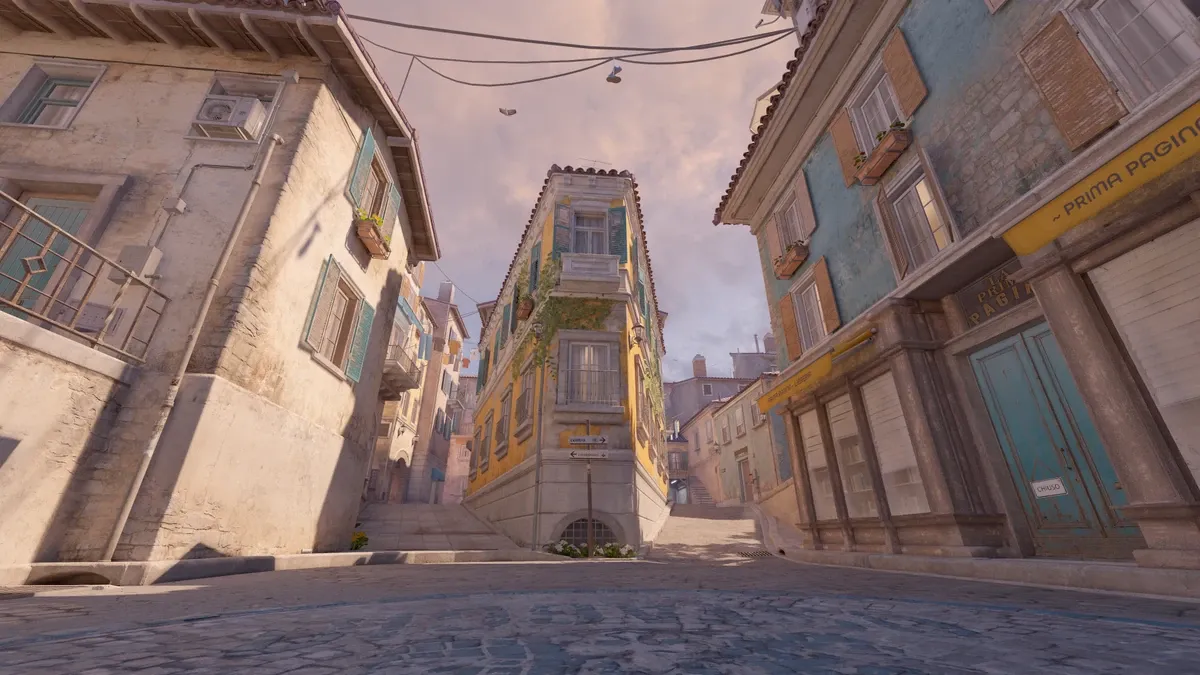
There is an Italian village that has been walked through by more people than the Colosseum has ever seen — its sun-baked walls, its washing lines, its cramped little marketplace — and yet it doesn’t appear on any map of Italy. It’s called Italy too, or rather cs_italy, and for more than two decades it has been one of the most beloved settings in Counter-Strike, the video game that turned a virtual Italian town into a global icon.
A village born from a Robert De Niro film
The map’s story begins not in Italy, but in front of a television. In the late 1990s, level designer Glen Cooper — known online as glenC — was watching Ronin, the 1998 thriller starring Robert De Niro. Though the film was largely shot in France, one glimpse of an Italian-style town lodged in his imagination: the narrow streets, the bustling market, the sense of danger around every blind corner. Cooper, then part of a modding clan playfully named [HOTSHEEP], set out to recreate that feeling, with textures handled by his teammate Jaison Green (DigiChaos).
What he built became a masterclass in atmosphere. Counter-Strike grew into a worldwide phenomenon — today a full-blown esport with millions of players and a skin economy so large that marketplaces like Skin.Land trade virtual weapon finishes for real money. But long before any of that, Italy was simply the map everyone wanted to play: tight, vertical, and unmistakably European in a genre full of grey warehouses.
The marketplace, the alleys, and a hint of South Tyrol
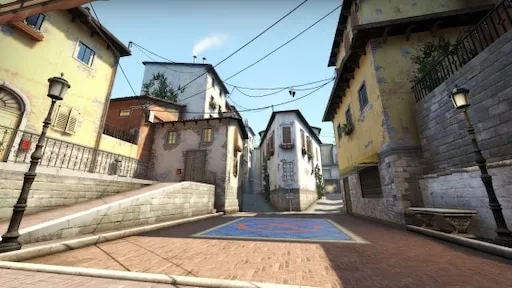
Anyone who has spent an evening on Italy can picture it instantly: the fountain, the winding stone alleys, and above all the marketplace — the open, sunlit heart of the map where most firefights erupt. Stalls, crates and awnings turn it into a chaotic close-quarters arena, the kind of place where a single well-timed rush can win a round.
Where in Italy is it meant to be? The game never says, but fans have played detective. A street sign reading “Bixio” has led many to point at Brixen (Bressanone) in South Tyrol, the German-Italian borderland in the country’s north — a region of exactly the kind of tight medieval streets the map captures. Whether or not that was the intention, the village feels authentically Italian: laundry strung between shuttered windows, terracotta roofs, and a lived-in warmth you rarely find in a shooter.
And then there are the chickens
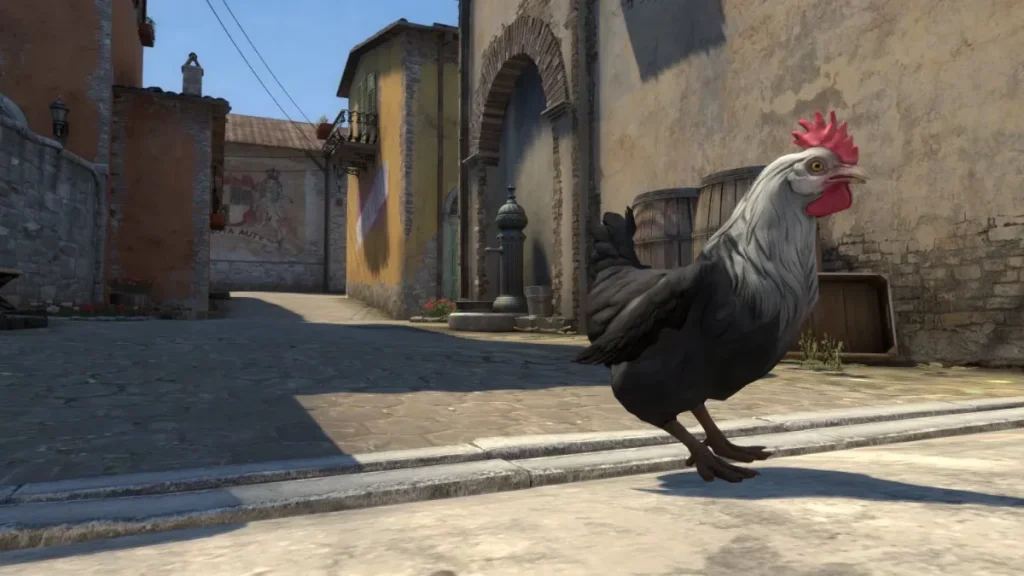
No story about Italy is complete without its most unlikely stars: the chickens. Wandering the alleys, clucking obliviously as gunfights rage around them, they debuted right here on this map. Cooper added them purely to bring the village to life — and, in a wonderful piece of gaming trivia, both the chicken models and their squawks were lifted from Quake 2. Two decades later, “protecting the chickens” is a running joke across the entire Counter-Strike community, and few things say Italy like a stray hen crossing the marketplace under fire.
A dusk-lit rebirth in Counter-Strike 2
For years Italy lived on through sheer nostalgia. Then Valve gave it a proper homecoming. In Counter-Strike 2, the village was rebuilt from the ground up on a new engine — fresh geometry, richer lighting, and a striking shift in mood: the map now takes place at dusk, bathing the terracotta and stone in golden, fading light. On 3 October 2024, as part of the game’s Armory update, Italy returned to the competitive rotation, letting a whole new generation discover the little Italian town that helped define a genre.
Skin.Land: the smart place to buy and sell CS2 skins
Counter-Strike isn’t just maps and memories — it’s home to one of gaming’s biggest virtual economies, where cosmetic weapon “skins” change hands for anything from a few cents to five figures. Whether you want to grab a finish for your loadout or turn idle inventory into cash, Skin.Land handles both sides of the trade: buy CS2 skins at transparent prices with no hidden fees, or sell CS2 skins instantly for real money — no eight-day Steam wait.
Where it really stands out is the payout options: bank cards (Visa, Mastercard), PayPal, Skrill, Neteller, SEPA bank transfer and even crypto wallets (Bitcoin, Ethereum, USDT and more). When you sell, the money lands in minutes — card and crypto payouts are near-instant. Throw in 24/7 support, a 4.7/5 Trustpilot rating and over 3 million skins traded, and it’s an easy go-to for players worldwide.
Why a fake Italian village still matters
There is something quietly remarkable about cs_italy. It was never a real place, yet it gave hundreds of millions of players around the world a mental postcard of Italy — the alleys, the market, the golden light — long before many of them ever set foot in the country. For a village that exists only in code, that is a very Italian kind of immortality: to be loved, argued over, and remembered for generations, chickens and all.
FAQ
Is cs_italy based on a real place in Italy?
Not officially. The map is a fictional Italian village, though a “Bixio” street sign has led fans to associate it with Brixen in South Tyrol. Its designer has said the inspiration came from seeing an Italian-style town in the 1998 film Ronin.
Who created the Italy map?
It was designed by Glen Cooper (glenC), with textures by Jaison Green (DigiChaos), during Counter-Strike’s early mod era. Both were members of a clan called [HOTSHEEP].
Why are there chickens on cs_italy?
The chickens were added to give the village life and atmosphere. They made their Counter-Strike debut on Italy, and both their models and sounds were borrowed from Quake 2. They’ve been a beloved community meme ever since.
Is Italy in Counter-Strike 2?
Yes. Italy was rebuilt from scratch for CS2 with all-new graphics and a dusk setting, and it returned to the competitive map pool on 3 October 2024 as part of the Armory update.
What is a CS2 skin and why is it worth money?
A skin is a cosmetic finish for a weapon. It doesn’t change gameplay, but rarity, condition and demand can make some worth thousands. Players buy and sell them on dedicated marketplaces, where the rarest items rival the price of a car.
