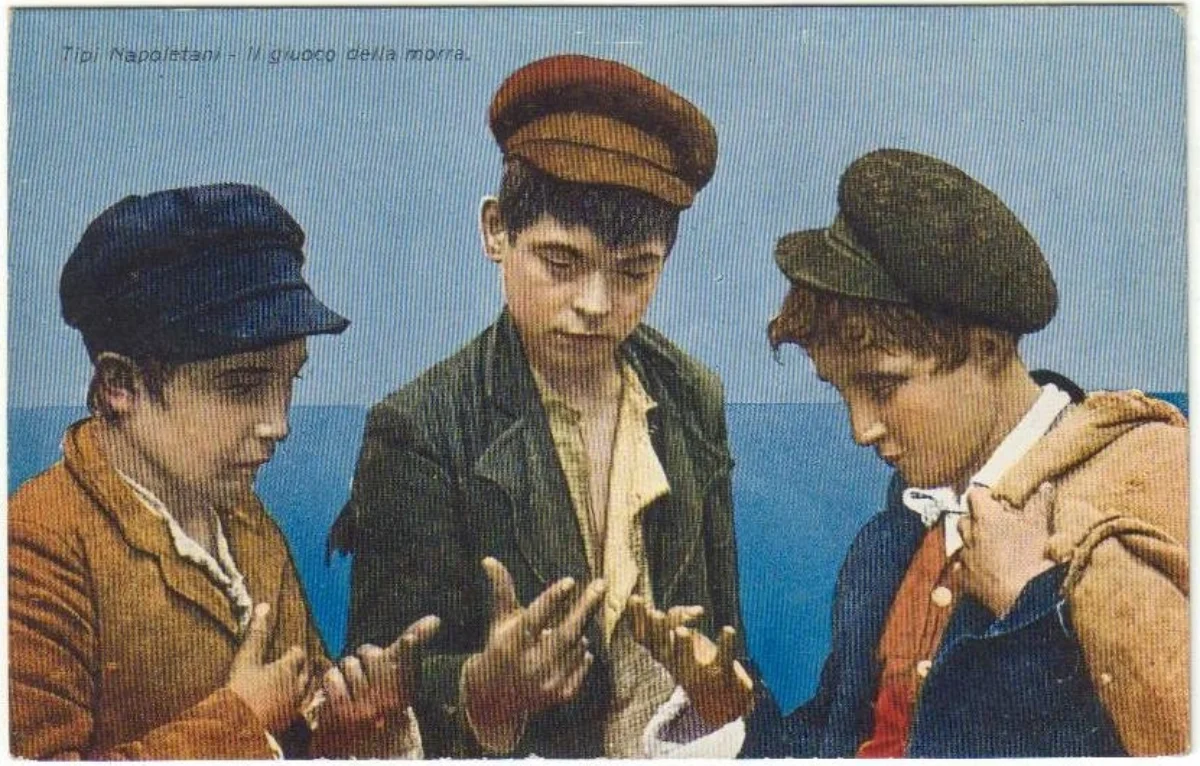
Italians have always been a game-loving people. Records exist all the way back in centuries of Italians creating, participating in, and enjoying games as fun pastimes, and even as a way to make money.
The first regulated casinos were established in 15th-century Italy 1as a way for their government to control gambling in the area during the carnival season. However, technological advancements now mean that you can gamble anytime and anywhere for fun and profit at an online casino today.
Games that Originated from Italy and Their Similarity to Modern Games
Many games that originated in Renaissance Italy bear a striking similarity to popular games today, even if parts of the play have since been changed or adapted through mixing with other cultures. Here are some of the most popular ones:
Tarocchi
Tarocchi was a trick-taking card game originating in Northern Italy (Milan, Ferrara, and Bologna) in the 15th century, and played by Italian nobility. It involved two teams of two players trying to one-up the other by playing superior cards to win rounds of the game2. Tarocchi is the forbearer of Tarot cards today, although it was not originally used for divination. As it spread around Europe, it gained esoteric value and began to be used for fortune-telling centuries later.
Biribissi
Biribissi is another fun game that originated from Genoa and Venice in Renaissance Italy. While it is no longer played in its original format by almost anyone today, it is the forbear of the ultimate table game of luck known as Roulette. It differs from roulette in that the winning number is picked from a bag by a banker3. While it was supposedly a game of luck, it was prone to cheating and fraud, hence, it was banned many times.
Primero
The Primero was similar to the poker games of today, in that it involved skill and bluffing. Gameplay would regularly involve 40 cards, with each player trying to obtain the best combination of high-value cards from four suits, while at the same time trying to offset their opponents into making mistakes4. Like poker, the primero was less about luck and more about the strategy of the player, and it always involved staking money.
Morra
The loudest game in the world. Morra has existed for thousands of years, dating back to probably ancient Egypt, however, it was also popular in Italy during the Renaissance years, and continues to be played in Italian communities to date. To understand how to play it, think of Rock, Paper, Scissors, except this time there are five possible options your opponent can display, ranging from numbers one to five shown by the finger on the hand, while you do the same. Your goal would be to predict the total cumulative number displayed by both you and your opponent, while they try to do the same5. Whoever can correctly predict the total number displayed scores a point, and the winner is whoever arrives at three points first.
Gioco dell’Oca (Game of the Goose)
Gioco dell’Oca originated from 16th-century Italy, where it was rumored that Francesco de Medici gifted it to Philip II of Spain. It is a spiral-track board game that contains penalties and rewards depending on where the dice roll lands the player6, similar to Snakes and Ladders. It was a fun family game that was also often gambled on.
Calcio Storico
This one is a brutal game of brawn. Calcio Storico originated in 16th-century Florence, and contains elements of soccer, rugby, and wrestling, but not in the sense that it copied them. It just has those elements.
The game involves two teams of 27 players out on a sand pitch, two nets on both ends of the pitch, and a ball7. The aim of the game is simple: put the ball in the opposing team’s net more times than they can put it in yours. To achieve this goal, players are permitted to move the ball with any part of their bodies (so the most common strategy is the rugby method of carrying the ball by hand), while the team without the ball is allowed to stop the other team by any means possible too – either by tackling them, or by wrestling – yes, wrestling.
Calcio Storico is less of a sport than it is a ritual to symbolize masculine honor, civic pride, and local rivalry. It is still played today during festivals in Florence.
Italian Cultural Relationship with Games
Every game was an opportunity for entertainment, but also, Italians always loved to demonstrate victory by making it tangible, and this explains why gambling has been a popular way to enjoy games for Italians. Even today, Italy is one of the biggest gambling markets in Europe.
- History of Gambling | Regulations, Types & Legalization | Study.com ↩︎
- https://www.youtube.com/watch?v=GsyZVBp28Ug ↩︎
- https://youtu.be/QRHGOWLN7S8?si=iB0_Kl7XD5KzcBCf ↩︎
- https://www.youtube.com/watch?v=emZfb2qNX9E ↩︎
- https://www.youtube.com/watch?v=SZIj2_E2Quc ↩︎
- https://www.youtube.com/watch?v=A5szDV0aLqk ↩︎
- https://www.youtube.com/watch?v=obneC8zQNIQ ↩︎

Contributing author to Weird Italy, a platform dedicated to the exploration of unique and unusual aspects of Italian culture, history, and contemporary phenomena.