
Pantalica Necropolis, rupestrian funerary architecture
- Ancient rock-cut tombs in Sicily’s Pantalica necropolis reveal insights into early Mediterranean burial practices and Bronze Age Sicilian cultures.

Pantalica, in the province of Syracuse, Sicily, is situated on a limestone promontory and is renowned for its rock-cut tombs dating from the 13th to 7th centuries BCE.
The necropolis of Pantalica is both a natural and archaeological site of great significance. The name “Pantalica” may derive from the Greek πάνταλίθος, meaning “place full of stones,” or the Arabic Buntarigah, which translates to “place full of caves”—a fitting name given the area’s numerous natural and artificial caves.
Perched on a plateau, Pantalica is encircled by deep canyons formed over millennia by the Anapo and Calcinara rivers. These geological features shape the landscape, which includes the Valle dell’Anapo, a key natural area. The Giarranauti region contains a forest, and a network of trails provides access to the site. The Riserva Naturale Orientata Pantalica, a designated nature reserve, is home to diverse flora, fauna, and bat caves. Visitors can reach the Valle dell’Anapo from two access points: one in Sortino and another in Ferla.

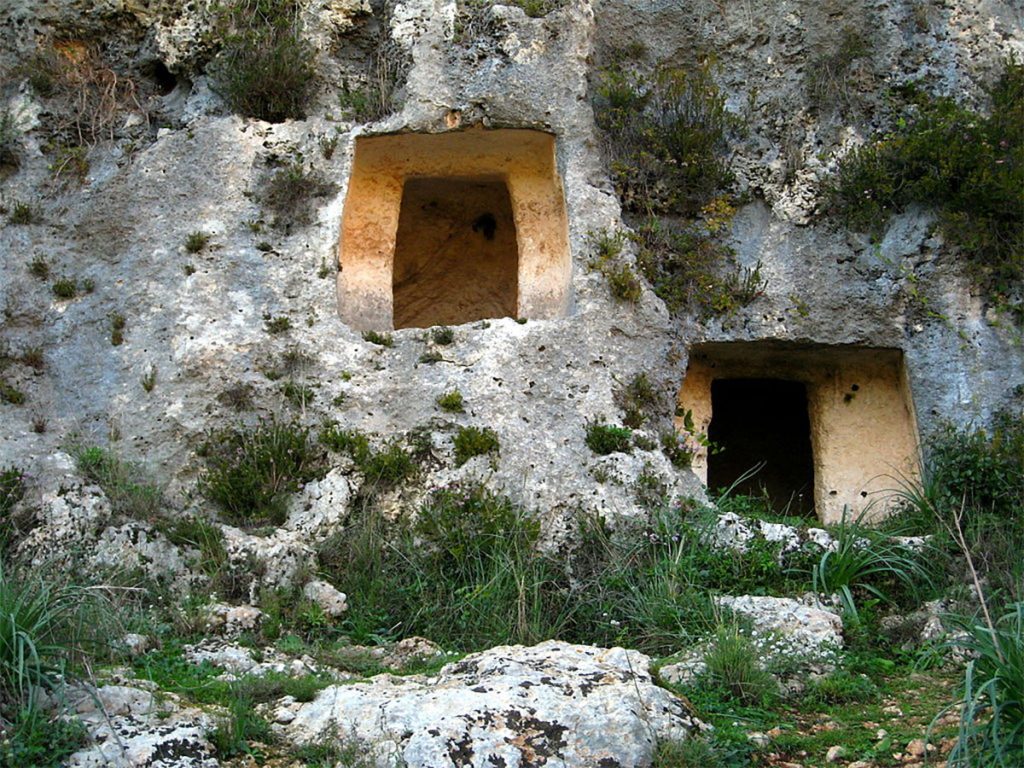
The remains visible today consist mainly of prehistoric burial chambers carved into the limestone rock, some featuring a porch or a short entrance corridor. These chambers were originally sealed with stones or a slab.
Pantalica also contains larger rock-cut dwellings, though their exact dating remains uncertain. While some suggest a Byzantine origin, they may belong to an earlier period. The anaktoron, often referred to as the princely palace, stands near the summit of the hill. Its origins have been debated; initially considered a Late Bronze Age structure influenced by Mycenaean palatial architecture, it is now more commonly associated with the Byzantine era.
Excavations at Pantalica took place primarily between 1895 and 1910 under the direction of Italian archaeologist Paolo Orsi. However, many tombs had already been looted or emptied long before his investigations began.
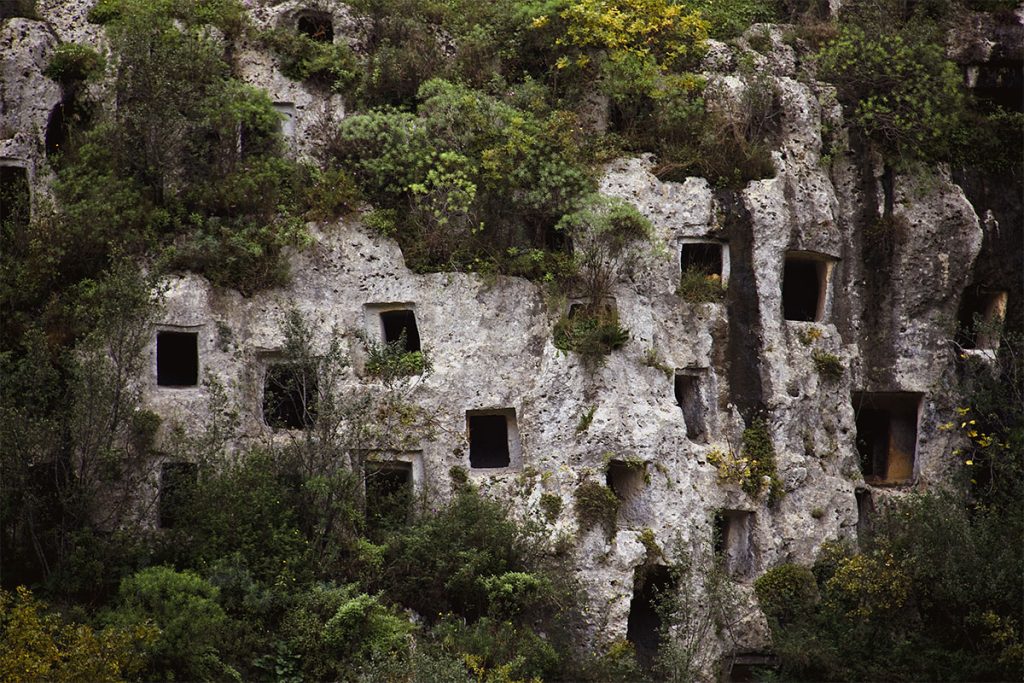

Artifacts unearthed by Paolo Orsi during his excavations are housed in the Archaeological Museum of Syracuse. These include distinctive red-burnished pottery vessels and various metal objects, such as small knives, daggers, and bronze fibulae (brooches) and rings, which were buried alongside the deceased.
Most tombs at Pantalica contained between one and seven individuals of all ages and both genders. Many were reopened periodically to accommodate additional burials.
During the period of use, the average lifespan was likely around 30 years. Estimating the prehistoric population remains difficult, but it may have exceeded 1,000 individuals.
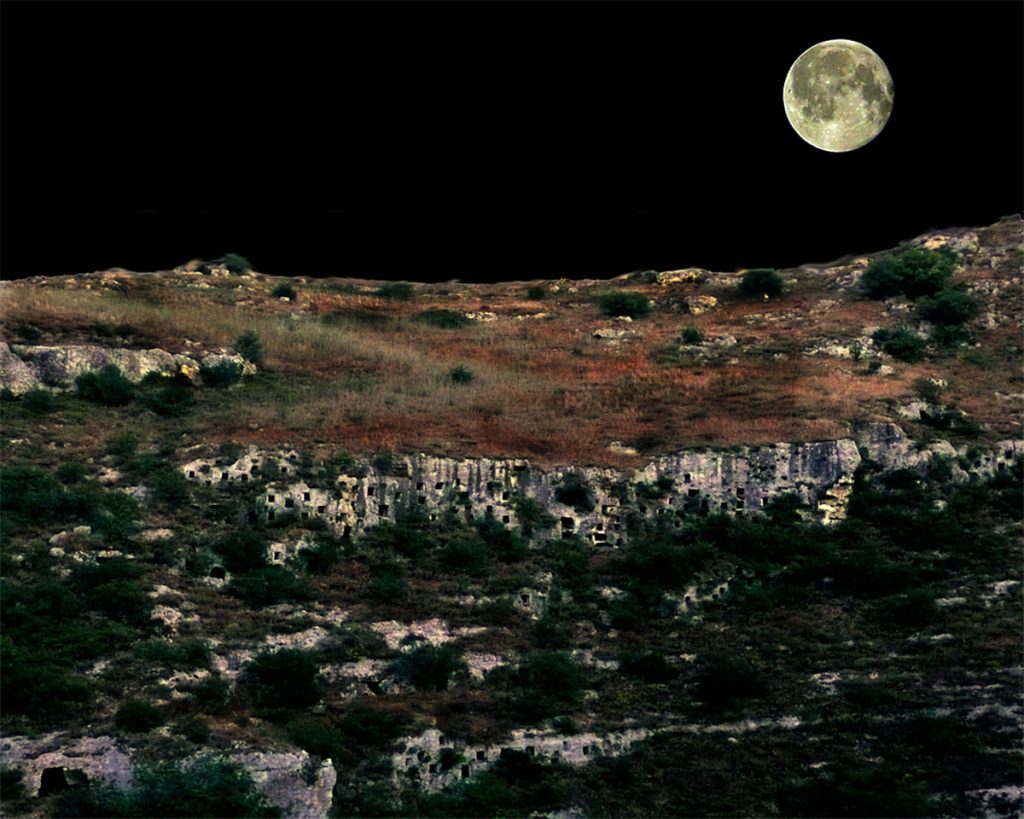

The archaeological area of Pantalica is centered around the anaktoron, its highest point. The plateau is surrounded by steep valleys, making the site largely inaccessible, except for the Sella di Filiporto, the only easily reachable route. This passage, now crossed by State Road 11 from Ferla, once featured a fortified entrance with a protective moat.
Early research by Paolo Orsi identified Pantalica as ancient Erbesso, but later studies by Bernabò Brea suggest it may correspond to Hybla, the kingdom of King Hyblon. According to historical accounts, Hyblon permitted the Megarians, led by Lamis, to settle in part of his territory, leading to the foundation of Megara Hyblaea in 728 BCE.
.jpg)
In the early 13th century BCE, coastal settlements in Sicily vanished abruptly, possibly due to the arrival of the Siculi and other Italic groups or for reasons still unknown. The indigenous population retreated to rugged, inland areas for protection, forming large settlements. These communities maintained cultural ties with Thapsos, the most significant coastal center, as reflected in artifacts and interactions with Mycenaean traders.
Around 1050 BCE, Pantalica temporarily declined as its population moved to the Necropolis of Cassibile and surrounding areas, where the Pantalica II facies emerged. However, by the early 9th century BCE, the settlement regained importance. During this transitional period, proximity to the coast brought Phoenician influences, particularly in trade and material culture.
By 850 BCE, for reasons that remain unclear—since Greek colonization of Sicily had yet to begin—the Siculi inhabitants of Pantalica withdrew from the coast to the interior. Similar settlements multiplied across southeastern Sicily, remaining inland until Greek arrivals led to both interaction and territorial conflicts.
The rise of Syracuse ultimately led to the destruction of the new city granted by King Hyblon to the Megarians. The Syracusans likely also dismantled the kingdom of Pantalica as their influence expanded inland, culminating in the foundation of Akrai in 664 BCE. Remnants of this era include the Anaktoron (Prince’s Palace) and an extensive necropolis with over 5,000 rock-cut tombs.
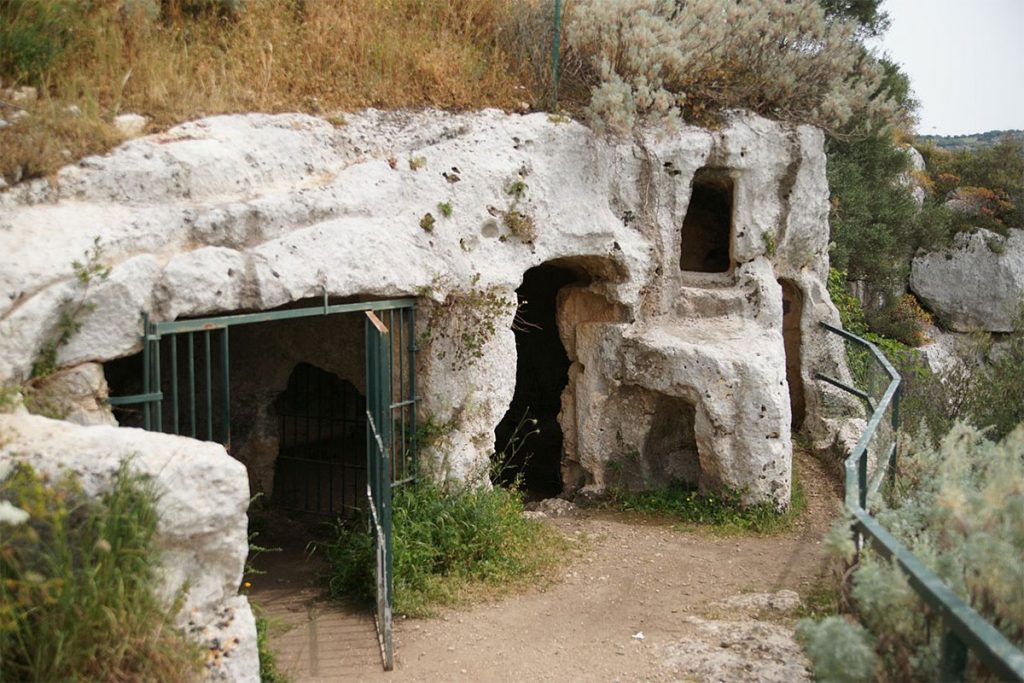

The necropolis area was not fully inhabited during the Greek period. Settlement only resumed in the early Middle Ages, around the 6th century CE, as barbarian raids, pirate attacks, and later Arab incursions in the 9th century forced populations to seek refuge in these remote, inaccessible areas. This period left behind traces of Byzantine-era dwellings, including rock-cut houses and small oratories. Even today, structures such as the Grotta del Crocifisso, San Nicolicchio, and San Micidiario remain visible.
Sources:
Images:
Topics:
ancient burial practices in Sicily, rock-cut necropolis of Pantalica, Bronze Age tombs in Italy, archaeological sites in southeastern Sicily, prehistoric settlements of Sicily, Mediterranean funerary traditions, Pantalica and early Sicilian culture
Notes:
Originally published on June 18, 2014. Updated on February 27, 2025

Weird Italy, Guide to Unusual & Amazing Places to see in Italy. Italy’s news in English: Art, History & Facts
1 thought on “The Ancient Rock-cut tombs of Pantalica in Southeastern Sicily”