Long before tattooing became a mainstream craft, pilgrims in central Italy were having religious symbols inked onto their wrists as souvenirs of their journeys. From the late 1700s through the early 1900s, travelers who reached the Holy House in Loreto, in the Marche region, left with permanent markings – tiny Madonnas, monstrances, Sacred Hearts. Most of this history is forgotten outside a handful of anatomical archives. This piece pulls that history back into view and then asks a simpler question: what would Italy’s older folklore creatures – basilisks, lake dragons, the Strix, Gatto Mammone, the Munaciello – actually look like on modern skin?
The forgotten story of Loreto pilgrimage tattoos
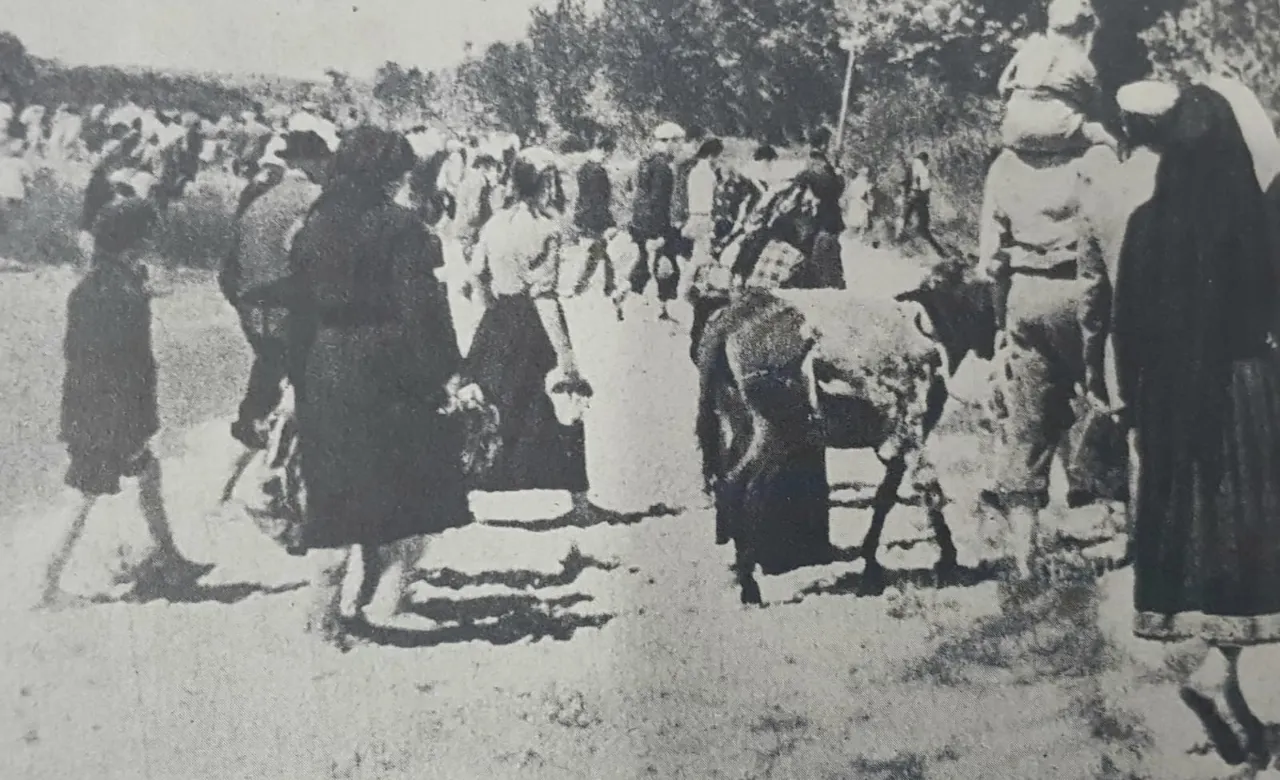
The pilgrimage to Loreto was one of the most important Catholic journeys in early modern Europe. The town’s basilica houses what tradition calls the Holy House, the structure believed to be the home of the Virgin Mary, miraculously transported from Nazareth. For roughly 150 years, pilgrims who made the journey often marked the experience the way sailors marked theirs – with a tattoo.
The markings were small, usually placed on the inner wrist or forearm. They were made by local tattooers whose names rarely survived, working with simple iron tools and hand-ground pigments. By the start of the 20th century, this centuries-old tradition had almost completely vanished from public memory.
Skin fragments in a Bologna anatomy drawer
What we know about these tattoos today comes from an unusual source. The Luigi Cattaneo anatomical collection at the University of Bologna preserves actual pieces of human skin carrying Loreto tattoos, studied by anatomists in the 19th century. According to research covered by Area Science Park, non-invasive spectroscopy at Elettra Sincrotrone Trieste identified the original pigments — plant-based carbon black for the linework, natural earth tones for brown, and a cinnabar-and-minium mix for red — along with the three-pointed iron tools that made them and the religious iconography they carried for more than a century.
That collection is one of the few physical records of the history of tattoos in Italy that survive from this period. It is also a reminder that tattooing in Catholic Europe was never a fringe practice – it had religious, protective, and biographical functions for ordinary people.
What the pilgrim wrists actually carried
The traditional Italian tattoos from Loreto were small and symbol-heavy. Across the surviving records and the Bologna specimens, the same images repeat:
- The Madonna of Loreto, often shown with the Holy House on her head
- Monstrances holding the Eucharist
- The Sacred Heart, frequently with flames or a crown of thorns
- Crucifixes and IHS monograms
- Dates of the pilgrimage, sometimes paired with initials
These were not decorative in the modern sense. They were credentials – proof of a journey completed – and protective amulets carried under clothing. A Loreto tattoo told your village where you had been, and in some reading, told God the same thing.
Italian folklore as modern tattoo material
The religious imagery is only half of what Italy could be giving back to modern tattooing. The folklore tradition is the other half, and it is largely untouched by current trends. The five figures below are drawn from older regional sources – Lombard, Roman, Neapolitan, Sicilian — and read through the eye of someone who works in realism every day, Los Angeles tattoo artist Rinat Tattarin, a realism and biomechanical specialist. Each creature carries a visual logic that translates to skin differently: some want fine linework, some want heavy black-and-gray, some want the industrial texture of biomechanical shading.
Five folklore monsters worth reimagining on skin
The basilisk
A serpent-king born from a rooster’s egg hatched by a toad, the basilisk is medieval Italy’s most feared creature. Realistic rendering works best when the artist leans into the small scale of the folklore animal – not a dragon, but a snake-sized predator with a crown. Fine scale work on the inner forearm, with the eye reading as the focal point.
The Tarantasio of Lake Gerundo
Northern Italy’s drowned dragon, said to have lived in the long-vanished Lake Gerundo in Lombardy. Tarantasio appears in the coat of arms of Milan and in the Eni oil company logo. For a tattoo, the biomechanical approach fits – long coiled body, industrial texture under organic skin, placed across the shoulder blade and down the upper arm.
The Strix
The Strix is a Roman night-bird, part owl and part witch, blamed in ancient texts for stealing infants’ blood. A realistic owl portrait with subtle anatomical wrongness – too many talons, a human-shaped eye – captures the folklore without sliding into cartoon territory.
Gatto Mammone
A monstrous cat from southern Italian folk tales, sometimes a trickster and sometimes a demon. Gatto Mammone works as a large-scale back piece in black-and-gray realism, drawing on medieval woodcut influences while using modern shading to give the fur real weight.
Munaciello
The Neapolitan house spirit, dressed as a small monk, who brings luck when happy and chaos when crossed. The visual tension between harmless monk and hidden threat is exactly what strong realism work turns into a lasting image. A hooded figure with a half-hidden face makes one of the stronger candidates for a small chest or forearm piece.
Why these forgotten Italian tattoos matter now
The modern tattoo industry has borrowed heavily from Japanese, Polynesian, and American traditional sources. Italy has been treated as if its tattoo history begins and ends with Roman numerals and Renaissance portraits. The Loreto pilgrimage marks and the folklore bestiary prove otherwise.
The point of surfacing this material is not nostalgia. It is that a realism practice willing to mine under-used Italian sources – the pilgrim wrist from 1850 alongside the basilisk reimagined for 2026 – gives tattoo work both cultural weight and visual novelty most portfolios do not have. Loreto pilgrimage tattoos belong to a lineage that includes modern religious ink, memorial pieces, and travel markings – all still alive, just under different names. The folklore creatures belong to a different lineage: one that intersects with the horror, dark fantasy, and biomechanical work already popular today.
Pulling these two threads together is what makes the handful of artists working in this direction – among them Los Angeles tattoo artist Rinat Tattarin – worth watching. The forgotten Italian material is not a gimmick. It is one of the few genuinely under-used sources left in a saturated industry.
