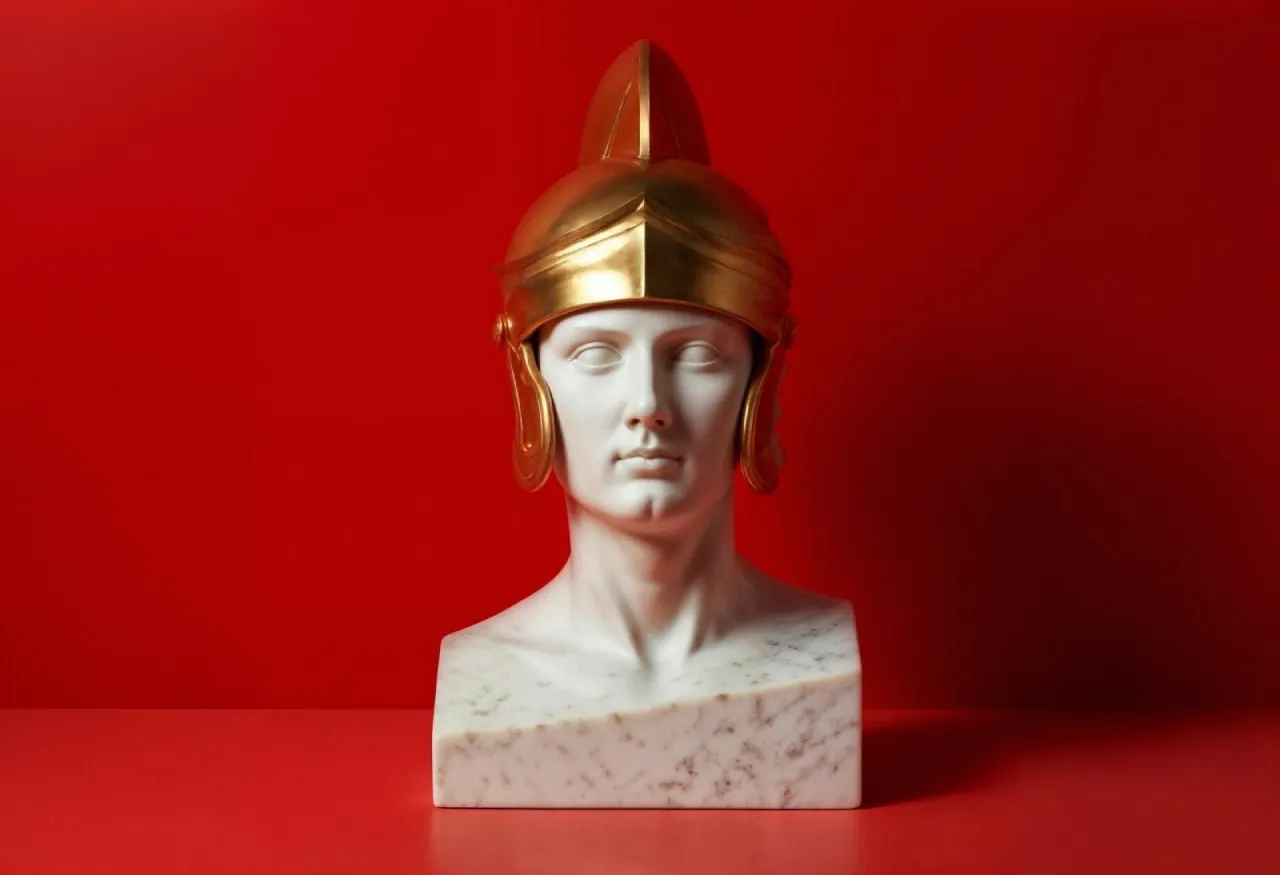
The Transroulette editorial team has spent considerable time looking at how trans identity gets discussed online — and one thing that keeps surfacing is the assumption that gender-nonconforming experience is somehow recent, a product of modern vocabulary or modern politics. The historical record argues otherwise. Some of the most striking documented cases in Western history belong not to the twenty-first century but to the Roman imperial court, nearly two thousand years ago. That the human need to live in an acknowledged identity and find others who share it is ancient isn’t a rhetorical flourish — it’s what the sources show. Today, trans chat beyond LuckyCrush has become one of the places that same search for recognition and connection plays out, now in real-time digital form. The question worth asking is what Rome’s most striking recorded cases actually reveal about identity, power, and social tolerance in the ancient world.
Elagabalus, the Emperor Who Reportedly Asked to Be Seen as a Woman
Few figures in Roman imperial history are as difficult to categorize as Elagabalus, and that difficulty is itself revealing. He came to power around 218 CE as a teenager, widely estimated at about fourteen years old, having served before his reign as a priest of the Syrian sun god Elagabal — the deity from whom he took his name. He was presented to the legions as the illegitimate son of Emperor Caracalla, a claim of uncertain truth that nonetheless proved sufficient to place him on the throne.
What the sources record about his reign goes well beyond the usual catalogue of imperial excess. The Historia Augusta describes Elagabalus as having preferred to be referred to in feminine terms, using feminine language about himself and reportedly approaching physicians with the question of whether a surgical conversion of his body was possible. He wore wigs and cosmetics in public. He was said to prefer tasks Roman culture coded as feminine — spinning wool among them — over the martial or administrative pursuits expected of an emperor.
The Historia Augusta is a complicated document. Scholars debate how much of its more sensational material can be trusted, and the biographies were compiled in late antiquity at some remove from the events they describe. That said, the account of Elagabalus is considered to draw on earlier source material, and its details have attracted serious historiographical attention rather than simple dismissal.
His reign ended in 222 CE when members of the Praetorian Guard assassinated him, along with his mother. The Senate followed with damnatio memoriae — the official condemnation of memory, an attempt to scrub his name from public record entirely. That erasure was never complete, which is why we know what we know.
Sporus, the Man Nero Dressed in Women’s Clothing and Called His Wife
Sporus occupies a different kind of place in the record. His story is not filtered through one late compilation but attested by two substantial ancient historians: Suetonius in his account of the Caesars and Cassius Dio in his Roman History. That double attestation makes the case among the best-documented of its kind from antiquity.
Sporus was a young freedman in Nero’s circle whom the emperor had castrated and then married in a formal public ceremony. Nero dressed him in women’s clothing, and the name Nero used for him was that of his recently deceased wife, Poppaea Sabina. What Sporus himself felt about any of this, the sources don’t say — he is recorded as acted upon rather than as a speaking subject, which is its own kind of historical limitation.
After Nero’s death in 68 CE, Sporus passed through the possession of several subsequent figures. His story ends in an account of suicide, with ancient sources describing him as choosing to die rather than be forced to participate in a public spectacle he found degrading. Even in that final detail, there’s something that resists reduction to pure victimhood: a person preserving a boundary, the only one left available.
The cases of Elagabalus and Sporus are separated by about 150 years. That they both appear in the surviving record, in substantial detail, tells you something about how visible gender-nonconforming experience was in Rome’s imperial period.
Roman Law, Social Norms, and the Visibility of Gender Nonconformity
Rome was not, by any reading, a society without a gender binary. The law was explicit: male and female governed inheritance, marital status, civic rights, and the expectations attached to freeborn citizenship. Masculine civic virtue was framed as inherently active and dominant — categories that weren’t just social preferences but were written into the architecture of Roman legal life.
And yet the culture produced a word, cinaedus, that described a man who adopted what Romans considered a culturally feminine or passive social role. It was a term of stigma and insult rather than a formal legal designation, but its very existence — common enough to appear across multiple authors and genres — reflects something important. Roman society recognized that such identities existed. It named them. It insulted them, yes, but insult requires visibility, and visibility means the phenomenon was too present to ignore.
Juvenal, writing his biting social satires in the early second century CE, devoted real energy to mocking men who wore feminine dress, adopted feminine mannerisms, or moved through social roles Romans considered women’s. The satirical tradition doesn’t document tolerance. What it documents is ubiquity. You don’t write elaborate mockery of things nobody sees.
Power, Rank, and What These Cases Actually Tell Us
Here’s where the interpretive challenge gets real. Were the documented behaviors of Elagabalus expressions of genuine personal identity? Political theater? Both? The honest answer is that the sources don’t let us know, and imposing modern psychological categories onto figures from 1,800 years ago would tell us more about our assumptions than about them.
What the cases do reveal clearly is that social rank shaped everything. Roman attitudes toward gender nonconformity were not uniform. Behavior considered scandalous in a freeborn elite man could be tolerated — or even expected — in theatrical performers, slaves, or participants in certain religious rites where gender transgression had an acknowledged ritual function. The same act carried a completely different weight depending on who performed it and in what context.
For Elagabalus, being emperor made his reported preferences both legible and catastrophic. Power gave him the room to behave as the sources describe; it also made that behavior politically explosive in ways that wouldn’t have applied to someone with less at stake. For Sporus, the absence of power meant his story was recorded only through the lens of what was done to him. The legal binary was firm. The lived reality was messier, more visible, and more varied than the law acknowledged.
These cases resist neat summary. The Roman world produced documented examples of gender-nonconforming life at the highest levels of imperial power and in the written record of its satirists — evidence that the experience was neither invisible nor confined to a single social stratum.
—
The figures Rome left us don’t map cleanly onto contemporary frameworks, and they shouldn’t have to. What they do share with every era since is the human impulse behind them: the need to live in an identity that feels true, and to find others who recognize it. That impulse doesn’t belong to any century. It recurs across recorded history, and it’s still recurring now.

Contributing author to Weird Italy, , a site focused on exploring the distinctive and unconventional facets of Italian culture, history, and modern life.