Every Italian family seems to have one. A dish that appeared every Christmas Eve, or on the first cold Sunday of autumn, made by a grandmother who never measured anything and never wrote a word of it down. Everyone assumed there would be time to learn it properly. Then one year the dish simply wasn’t there anymore, and nobody could quite remember how the sauce was thickened, or what went into the filling, or why hers always tasted better than anyone else’s.
This is how thousands of Italian recipes have disappeared. Not through neglect, but through the quiet assumption that the person who knows them will always be around to cook them. It’s a big part of why Italian home cooking is now recognized as part of the world’s cultural heritage: what makes it special isn’t only the food, but everything passed from one generation to the next along with it.
Why Italian Recipes Were Never Written Down
For most of Italian history, home cooking was not something you read. It was something you absorbed. In rural villages and working-class city neighborhoods, girls learned by standing next to their mothers and grandmothers at the stove, watching, tasting, and eventually being trusted with the rolling pin. Many of the women who cooked these dishes had little schooling, and the idea of recording a recipe on paper would have seemed strange. You didn’t need instructions for something you had watched a thousand times.
The recipes were also deeply local. A ragù in one valley was not the same as the ragù two villages over, and a family’s version of a dish often carried small changes made during hard years, when meat was scarce or a particular flour could not be found. That patchwork goes back centuries, to a time when Italy was split into small towns and states that each developed their own way of eating. These variations rarely made it into cookbooks, which is exactly what makes them worth saving.
And then there is the phrase every Italian grandchild knows: quanto basta. As much as needed. It appears in written Italian recipes as “q.b.,” but in a nonna’s kitchen it covers almost everything. How much salt? Quanto basta. How much flour? Until it feels right. Ask for a precise quantity and you’ll often get a shrug, a gesture, or a look suggesting the question itself is a little absurd.
Measurements Don’t Tell the Whole Story
Even when families do manage to write something down, the result often disappoints. The ingredient list is correct, the steps are in the right order, and yet the dish never tastes quite like hers.
That’s because the most important parts of a traditional recipe usually aren’t ingredients at all. They’re the moment she decides the soffritto has cooked long enough, based on its smell rather than a timer. The way she tests pasta dough by pressing it with a thumb. The exact color she waits for before adding the tomatoes to a ragù that will simmer all afternoon. The rhythm of her hands when she shapes cavatelli or pinches the edges of a ravioli.
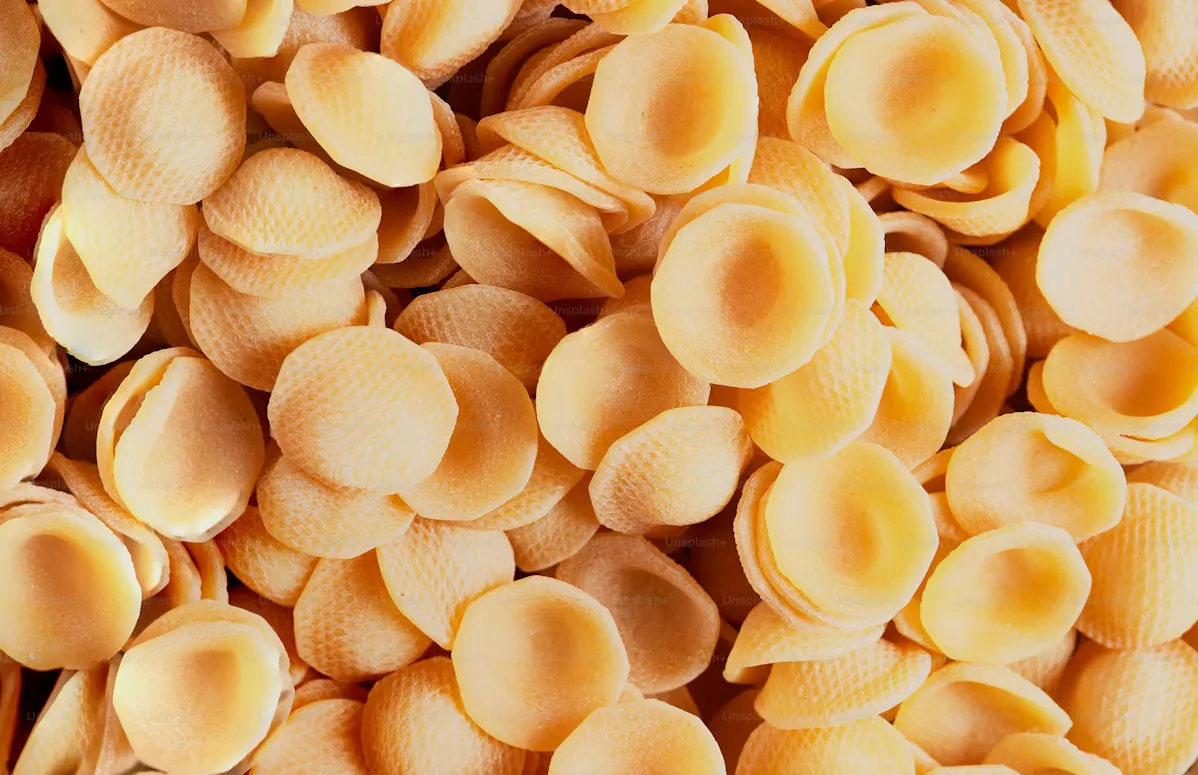
In Bari’s old town, women still sit outside their doorways shaping orecchiette with a knife and a flick of the thumb, so fast that the movement is almost impossible to follow. Ask one of them to explain it and she’ll tell you it’s easy. Try it yourself and you’ll understand that what she knows lives in her hands, not in words.
This is why recording, rather than writing, is the best way to preserve a family recipe. Technique needs to be seen.
How to Prepare Before You Start Recording
Before you set up anything, choose one dish. Trying to capture an entire family repertoire in a single weekend usually ends with half-finished notes and an exhausted cook. Start with the recipe that matters most to your family, or the one most at risk of being forgotten, and give it a full day.
The single best piece of advice is to cook with her rather than simply watch. Many older cooks are uncomfortable being observed, and they’re far more natural when someone is working alongside them, peeling potatoes or stirring a pot. Cooking together also forces you to learn the dish with your own hands, which will help later when you try to make it alone.
Keep a small kitchen scale nearby. When she tosses in a handful of grated cheese or a “pugno” of flour, you can quietly scoop the same amount onto the scale afterward and note the weight. She doesn’t need to change the way she cooks. You’re simply translating her instincts into numbers for the generations who won’t have her standing beside them.
Prepare a few questions too, but keep them simple and easy to answer while she’s busy. Where did she learn this dish? Did her mother make it the same way? What does she do when a particular ingredient isn’t available? These small conversations often reveal as much as the recipe itself.
Capturing the Hands, Not Just the Faces
The hardest part of recording a recipe is that the most important moments happen in the hands. Kneading, folding tortellini, judging when the dough is ready: none of it waits for you to wipe the flour off your fingers and unlock a phone. If you’re cooking alongside her, camera glasses let you record from your own point of view with a quick voice command, so the footage shows exactly what your eyes see as you follow her movements. It also feels less like a film set, which matters more than you’d think. Most nonnas cook differently the moment a phone is pointed at them.
If you’re using a phone or camera instead, set it on a stable surface near the work area and angle it down toward the counter, where the real action happens. A second person holding a phone can work well for wider shots of the kitchen, but try to keep the recording as unobtrusive as possible.
Natural light makes a big difference. A kitchen window, a morning session, or simply turning on every light in the room will give you footage clear enough to see the texture of a dough or the color of a sauce. And don’t stop recording during the quiet moments. The pauses, the tasting, the small corrections she makes without thinking are often the details you’ll be most grateful for later.
Recording the Stories Behind the Dish
A family recipe is never only about food. That Christmas dish might carry a story about a great-grandmother who emigrated to Buenos Aires or New York and adapted the recipe with whatever ingredients she could find there. A simple bean soup might go back to wartime years, when families made meals out of almost nothing. A particular cake might have been made only for weddings in her village.
These stories rarely come out in a formal interview. Sit her down in front of a camera and ask about her childhood, and she may freeze or give short, polite answers. Ask her the same question while she’s rolling out pasta, and the memories often flow on their own. It helps to have a few good oral history questions in the back of your mind, but let the cooking lead the conversation.
Pay attention to the words she uses as well. Many older Italians cook in dialect, with names for tools, techniques, and dishes that don’t exist in standard Italian. A rolling pin might not be a “mattarello” in her kitchen, and the dish itself might have a local name no cookbook would recognize. Italy is home to an extraordinary range of regional languages and dialects, and a family recipe recorded in her own words preserves a small piece of that heritage too.
Turning Footage into a Family Cookbook
Once you have your recordings, the real work begins. Watch the footage soon after the cooking session, while the day is still fresh, and write down each step as you see it. Add the weights from your kitchen scale, note the cooking times you observed, and describe the visual cues she relied on: “the dough should feel like an earlobe,” “cook the onions until they’re golden but not brown.”
Keep her phrases exactly as she said them, even when they aren’t precise. “Quanto basta” and “until it smells right” belong in the final recipe, alongside your measurements. Together they tell future cooks both what to do and how she thought about the dish.
Photos taken from your footage can turn simple notes into something much more personal. A still of her hands shaping gnocchi or a close-up of the finished dish on her favorite plate will mean far more to your family in twenty years than any stock image. Some families put everything into a printed book, others create a shared digital folder where cousins can add their own versions and memories. Either way, what matters is that the recipe now exists somewhere beyond one person’s memory.
If you’re looking for a starting point, simple peasant dishes are often the ones most at risk of being forgotten, precisely because they seemed too ordinary to write down. Tuscan classics like ribollita and acquacotta, or a humble pasta e fagioli, exist in countless family versions, each one slightly different and each one worth keeping.
The next time she’s in the kitchen, don’t wait for a better moment. Pull up a chair, roll up your sleeves, and start recording. Years from now, someone in your family will make that dish exactly the way she did, and they’ll have you to thank for it.
Featured image: Unsplash
