Prague and Vienna make an unusually rewarding pairing for a Central European escape. Both cities have grand historic centres, elegant architecture and a strong café culture, yet their personalities are quite different. Prague feels intimate and atmospheric, with medieval lanes, riverside viewpoints and Gothic towers packed into a walkable centre. Vienna is broader and more formal, shaped by imperial palaces, monumental boulevards, classical music and sophisticated coffee houses. Travelling between them is straightforward, making it possible to experience two distinctive capitals without spending much of the trip in transit.
Start with Prague’s Old World Atmosphere
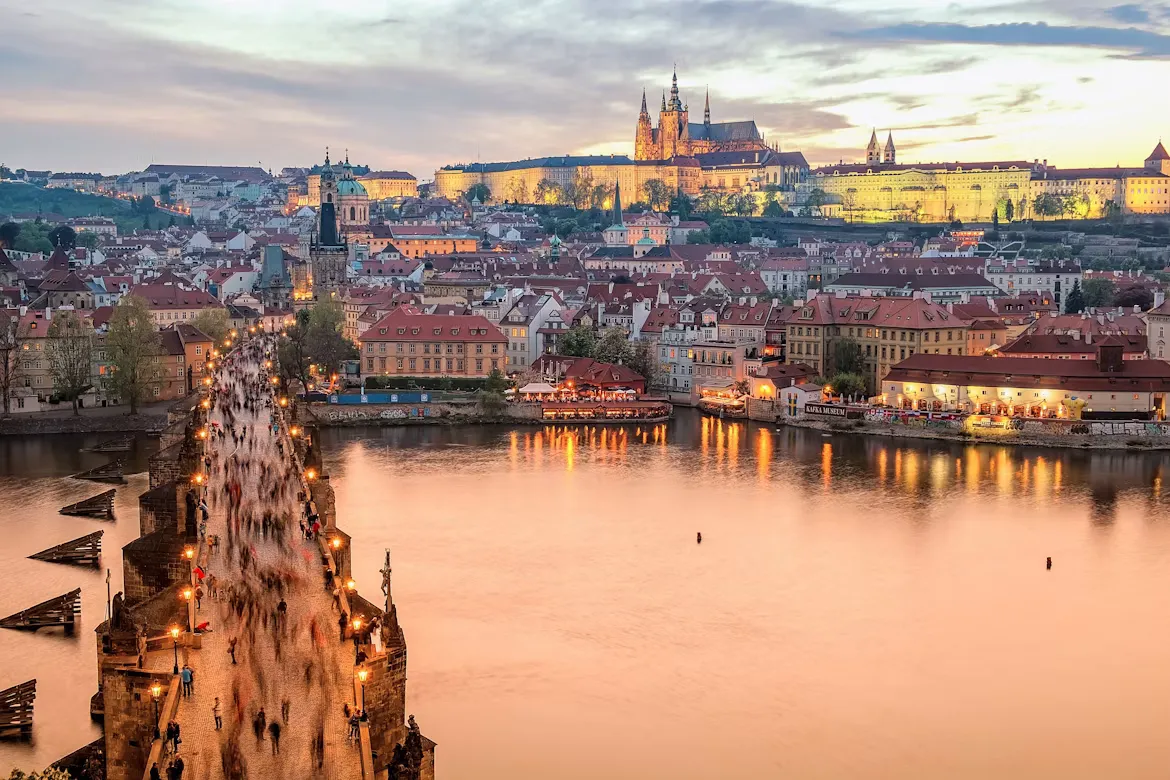
Prague is a city that rewards walking without a rigid plan. Begin in the Old Town, where the Astronomical Clock draws visitors to the main square, then continue through narrow streets towards the Charles Bridge. Early morning is particularly appealing here, before the bridge fills with pedestrians and street performers. The view towards Prague Castle is one of the city’s most recognisable sights, especially when the rooftops catch the first light.
Crossing the Vltava leads towards Malá Strana, an area of Baroque buildings, quiet courtyards and steep lanes. From here, the climb towards Prague Castle introduces another side of the capital. St Vitus Cathedral dominates the complex, while the surrounding courtyards and gardens provide plenty of space to pause. Rather than rushing through every building, allow time to wander between the major landmarks and appreciate the changing views over the city.
Moving South Towards Vienna
The journey from Prague to Vienna is one of the easiest ways to connect these two capitals. The train Prague to Vienna route is especially convenient for travellers who want to avoid airport transfers and make the journey part of the experience. Rail services connect the city centres, so there is little need to factor lengthy journeys to and from distant airports into the itinerary. Depending on the service, the trip takes roughly four hours, leaving plenty of time for sightseeing on either side.
Travelling by rail also creates a natural transition between the two destinations. Prague’s compact historic streets gradually give way to the landscapes of the Czech and Austrian countryside, before Vienna’s larger urban setting appears. For a short multi-city break, that simplicity makes a significant difference. There is no need to sacrifice half a day to transportation, and luggage can remain close at hand throughout the journey.
Vienna and the Grandeur of the Habsburg Era
Vienna introduces a different architectural scale. The Ringstrasse curves around the historic centre, passing landmarks such as the Vienna State Opera, Parliament and the Burgtheater. Walking along this grand boulevard offers a useful introduction to the city’s imperial character, but the most interesting discoveries often appear once you turn into the older streets beyond it.
Hofburg Palace deserves time, particularly for visitors interested in the history of the Habsburg dynasty. The complex is vast, incorporating museums, ceremonial rooms and the Spanish Riding School. Nearby, the Kunsthistorisches Museum contains an exceptional collection of European art, while the MuseumsQuartier provides a more contemporary contrast. Vienna works best when grand attractions are balanced with unhurried stretches spent exploring smaller streets and public squares.
Two Café Cultures Worth Comparing
Food and drink provide another enjoyable contrast between the capitals. Prague is closely associated with hearty Czech cooking, including dishes such as goulash, roast pork and dumplings. Traditional pubs remain an important part of the city’s social life, and many historic establishments have an atmosphere that feels distinctly local rather than polished for tourists. Czech beer is naturally part of the experience, with numerous breweries and pubs offering regional varieties.
Vienna takes café culture to another level. A traditional coffee house can easily become part of the day’s itinerary rather than simply a place to grab a drink. Order a melange alongside a slice of cake, settle into the room and take a break from sightseeing. Sachertorte is the most famous choice, although apple strudel and other pastries deserve attention too. Markets and neighbourhood restaurants provide a broader culinary picture, from Austrian classics to dishes reflecting Vienna’s diverse population.
Choosing the Right Pace
Three or four days can work well for a combined visit, although adding extra nights gives both capitals more breathing room. Prague can be explored efficiently on foot, particularly if accommodation is close to the historic centre. Vienna’s public transport network makes it easy to reach areas farther from the centre, including Schönbrunn Palace and the districts beyond the Ringstrasse.
A sensible itinerary might devote the first two days to Prague before travelling onwards to Vienna. In Prague, combine the Old Town and Charles Bridge with Malá Strana and the castle district rather than trying to cover every museum. In Vienna, leave room for Schönbrunn, the Hofburg and a walk along the Ringstrasse, then reserve an evening for a concert, opera or relaxed dinner.
The season can influence the character of both cities. Spring and early autumn generally bring comfortable conditions for walking, while summer has longer daylight hours but attracts more visitors. Winter creates a completely different mood, with Christmas markets and illuminated streets adding seasonal appeal. Prague tends to feel particularly atmospheric in colder weather, while Vienna’s grand squares and cafés lend themselves naturally to winter afternoons.
A Journey Built Around Contrast
What makes Prague and Vienna work so well together is not their similarity but their contrast. Prague feels layered and intimate, with its medieval core, riverside setting and irregular network of streets. Vienna is more spacious and ceremonial, reflecting centuries of imperial ambition and a long association with music, art and intellectual life.
The two cities can therefore be enjoyed without feeling as though the second stop is simply an extension of the first. Prague brings Gothic spires, colourful façades and lively squares, while Vienna shifts the mood towards palaces, museums, elegant cafés and monumental avenues. Even their evenings have different rhythms, from Prague’s riverside bars and traditional pubs to Vienna’s concert halls and candlelit restaurants.
Conclusion
A Prague and Vienna trip offers an impressive amount of variety within a relatively compact part of Europe. The capitals are close enough to combine comfortably, yet distinct enough to make the journey feel like a genuine change of scene. Spend time walking Prague’s historic quarters, cross the city by rail, then slow down in Vienna with its museums, palaces and celebrated cafés. With a little planning, the result is a balanced Central European break that combines major sights with the pleasure of simply being in two remarkable cities.
Featured image: Unsplash
