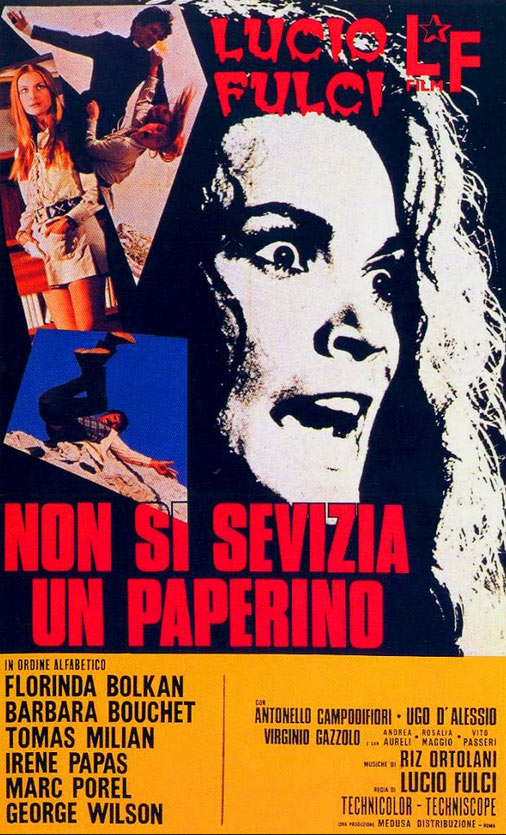
The Gritty Logic of Southern Gothic
The sun bleached stones of Accendura provide no sanctuary from the rot beneath the soil. In Lucio Fulci 1972 film, the rural landscape of Basilicata functions as a site of sensory and psychological friction. The camera fixates on the tactile roughness of the terrain, where dry earth and crumbling masonry mirror the moral decay of a community governed by archaic suspicion. Violence here is not a cinematic abstraction but a consequence of stagnant traditions colliding with the intrusions of the modern press.
Accendura Material Decay
The village exists as a labyrinth of claustrophobic alleys and jagged hillsides. Fulci emphasizes the physical weight of this environment through long shots of desolate highways and close ups of weathered faces. When Bruno Lo Casio disappears, the subsequent investigation by Inspector Capuana and Captain Modesti reveals a social structure held together by superstition rather than law. The ransom request sent to Giuseppe Lo Casio creates a temporary diversion, yet the actual horror resides in the silence of the landscape. The frame often feels crowded with the heat of the southern sun, creating an atmosphere of inescapable pressure.
Ritual and Scapegoating
Justice in Accendura operates through the lens of folk horror. Maciara, the local practitioner of folk magic, occupies the periphery of the social order. Her presence serves as a convenient vessel for the town collective anxiety. The sequence of her demise remains one of the most brutal depictions of mob mentality in Italian cinema. The villagers do not seek the truth but a sacrifice to appease their own terror. The physical assault on Maciara, set against the indifferent backdrop of a modern motorway, highlights the violent disconnect between ancient blood rites and the burgeoning industrialization of Italy.
Media and Urban Voyeurism
Andrea Martelli represents the cynical gaze of the Roman metropole. His arrival, along with a swarm of journalists, transforms the local tragedy into a national spectacle. Martelli navigates the village with a detachment that reflects his professional exhaustion. Patrizia, another outsider fleeing her own scandals, joins him in a fragile alliance. Their presence introduces a technological contrast to the primitive village. The clicking of cameras and the rustle of newsprint provide a percussive soundtrack to the ongoing killings of Michele and Tonino. This intrusion suggests that the urban world is not a savior but a different kind of predator.
Clerical Shadows
Don Alberto Avallone maintains an unsettling influence over the local youth. The church grounds, where boys play soccer under his watchful eye, offer a surface of normalcy that masks deeper pathologies. His mother, Dona Aurelia, occupies a house defined by silence and the presence of her daughter. The child represents a silent witness to the carnage, her limited communication acting as a barrier to the resolution of the crimes. Fulci uses these domestic spaces to suggest that the source of the killings is woven into the very fabric of the family and the faith. The resolution of the mystery offers no catharsis, only a bleak confirmation of human frailty.
The youngster Bruno Lo Casio goes missing in the primitive community of Accendura, and the police inspector, local commissioner, and village Captain Modesti investigate the matter. When his father gets the ransom request, the police arrest Giuseppe and learn he is innocent. The lads Michele and Tonino are then slain, and the authorities assume the local witch Maciara, who performs black magic, is the murderer, although she is also innocent. However, the people are superstitious and stupid and mercilessly murder her. Meanwhile, the area is teeming with journalists, including Rome’s seasoned Andrea Martelli (Tomas Milian).
They meet Don Alberto Avallone, the town priest, who has a group of boys who play soccer at the church and is the son of the strange Dona Aurelia Avallone, who raises her delayed six-year-old daughter. They believe the youngster observed the murders and may know who the perpetrator is.